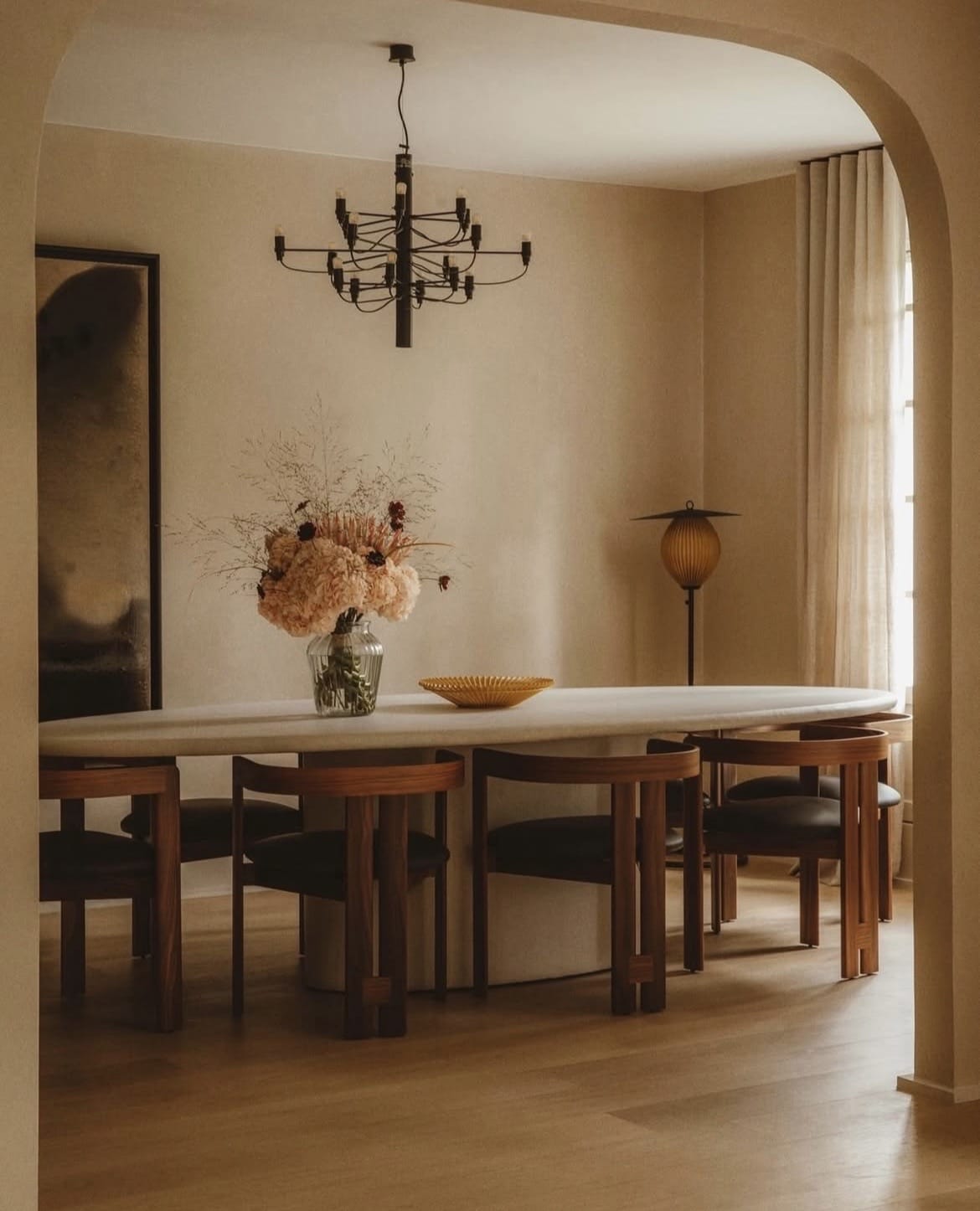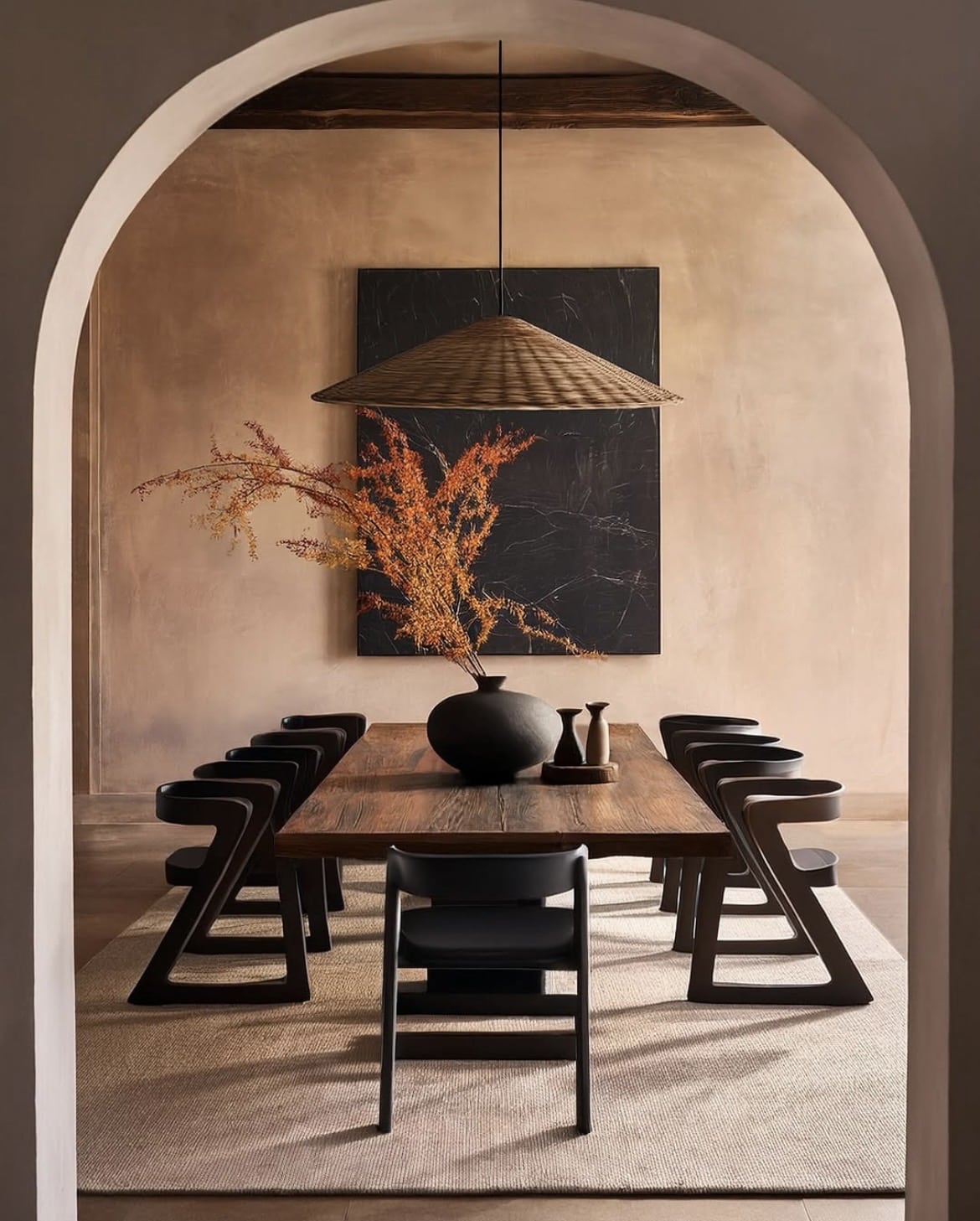
One interior design style that continues to grow in popularity is Japandi design. A beautiful blend that takes inspiration from the earthy, minimal and sometimes imperfect Japanese design, and the simplicity, relaxed nature of Scandi design.
Japandi style is calm, collected and comfortable to be around. A perfect style to lean into in a dining room, prepare to be inspired with these ideas from real life homes.
29 Japandi Dining Room Design Ideas For A Calm Interior
1.Diffused Lighting
There’s no such thing as bright, harsh overhead lighting in Japandi design. Japanese design is all about cosy, diffused lighting. Voile curtains are a must have for day time use in a dining room as they softly filter natural light whilst providing privacy too.
Up lighted ceiling pendants will help to create an ambient feel in a dining room without light being directly projected onto the table. Layering with other light sources will also help to set the tone and make the room feel even more comfortable. Candlelight is a must have addition to tick all the boxes for Scandinavian design.
2. Combined Kitchen/Diner
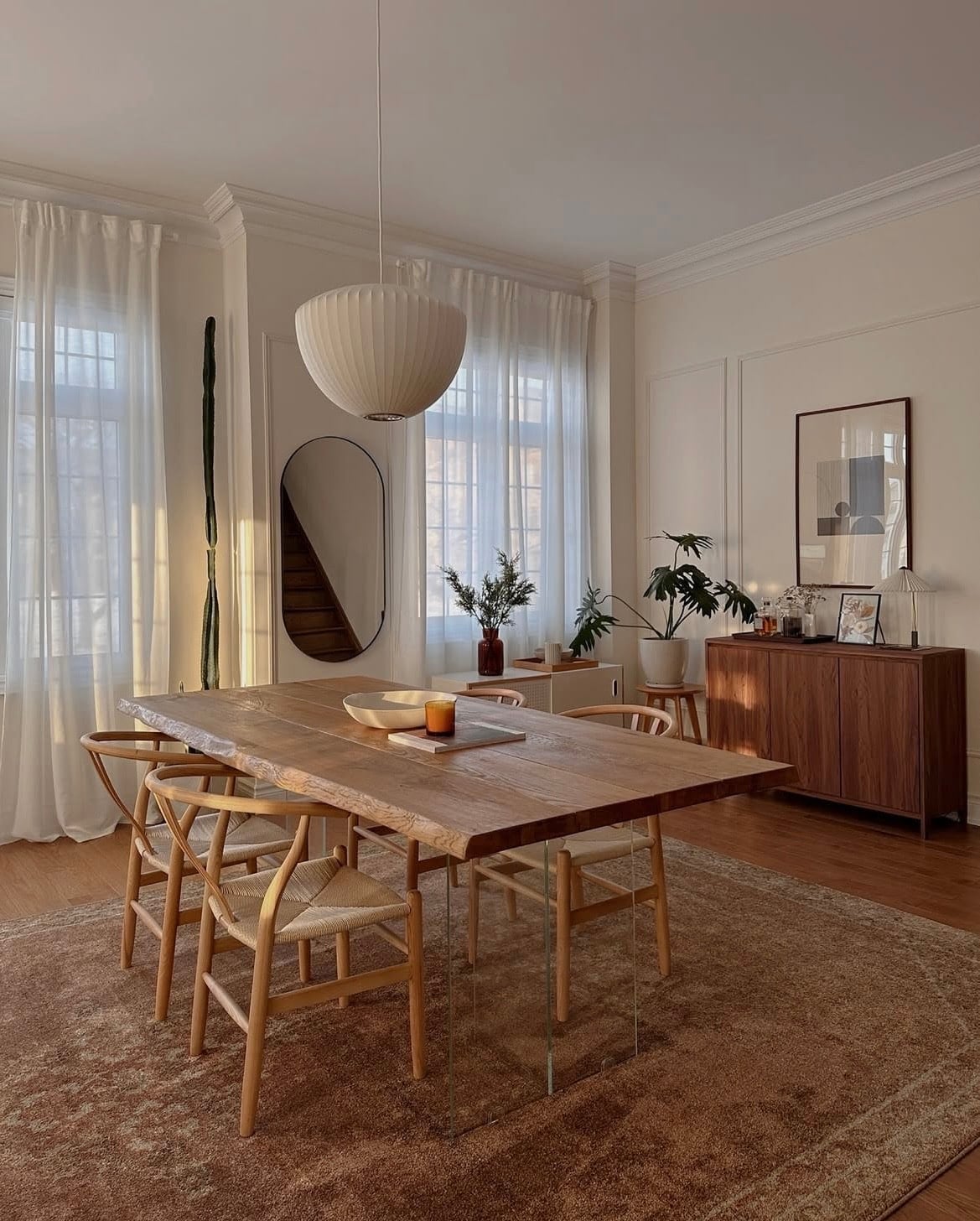
Nobody nails Japandi design quite like Cate! A combined kitchen/diner is a great way to make use of space, Japanese homes are often smaller and more compact and it’s a lovely way to create a cosy, workable environment if you don’t have a dedicated dining room.
The mixture of wood elements really brings some natural warmth to the forefront of this design, and it makes it feel good to be around.
3. Soft Wooden Tones
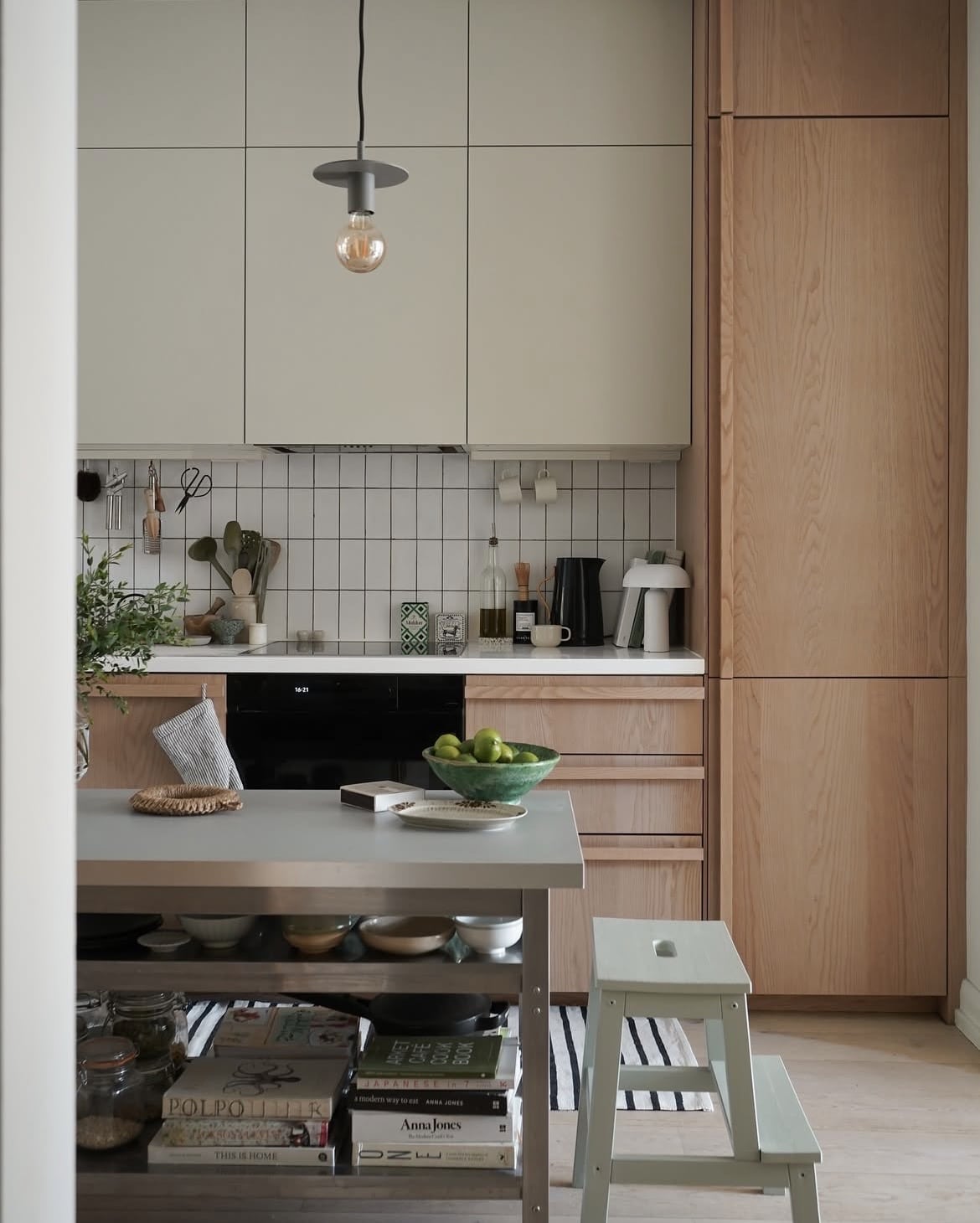
Wood features heavily in Japanese design, it’s intrinsic to human life and it’s a natural element that works so well in Japandi design as a whole.
Lean into softer wooden tones to pay more homage to Scandinavian design, keep your walls a light off-white to be in keeping with this design trend.
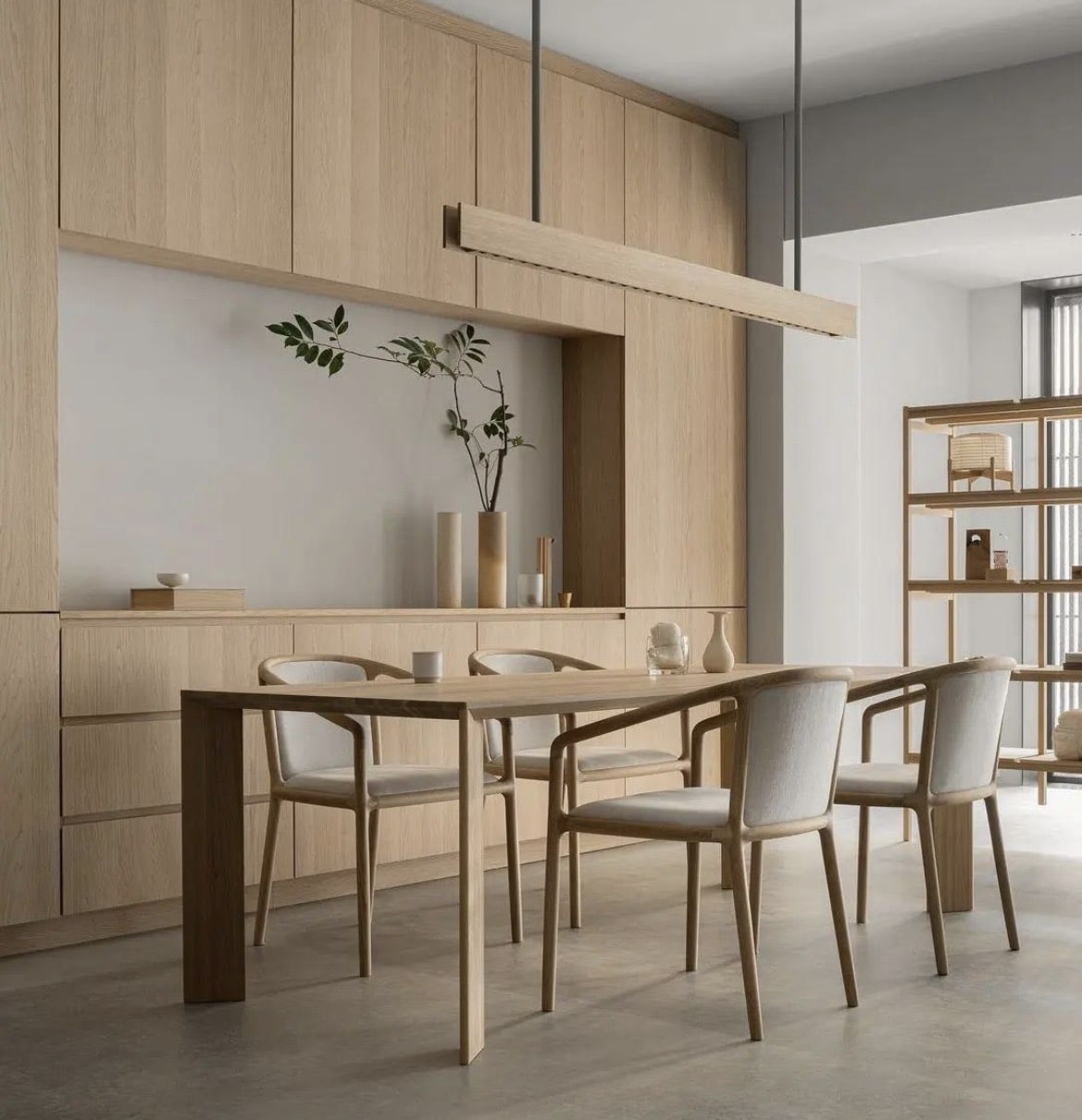
4. Introduce Wall Panelling
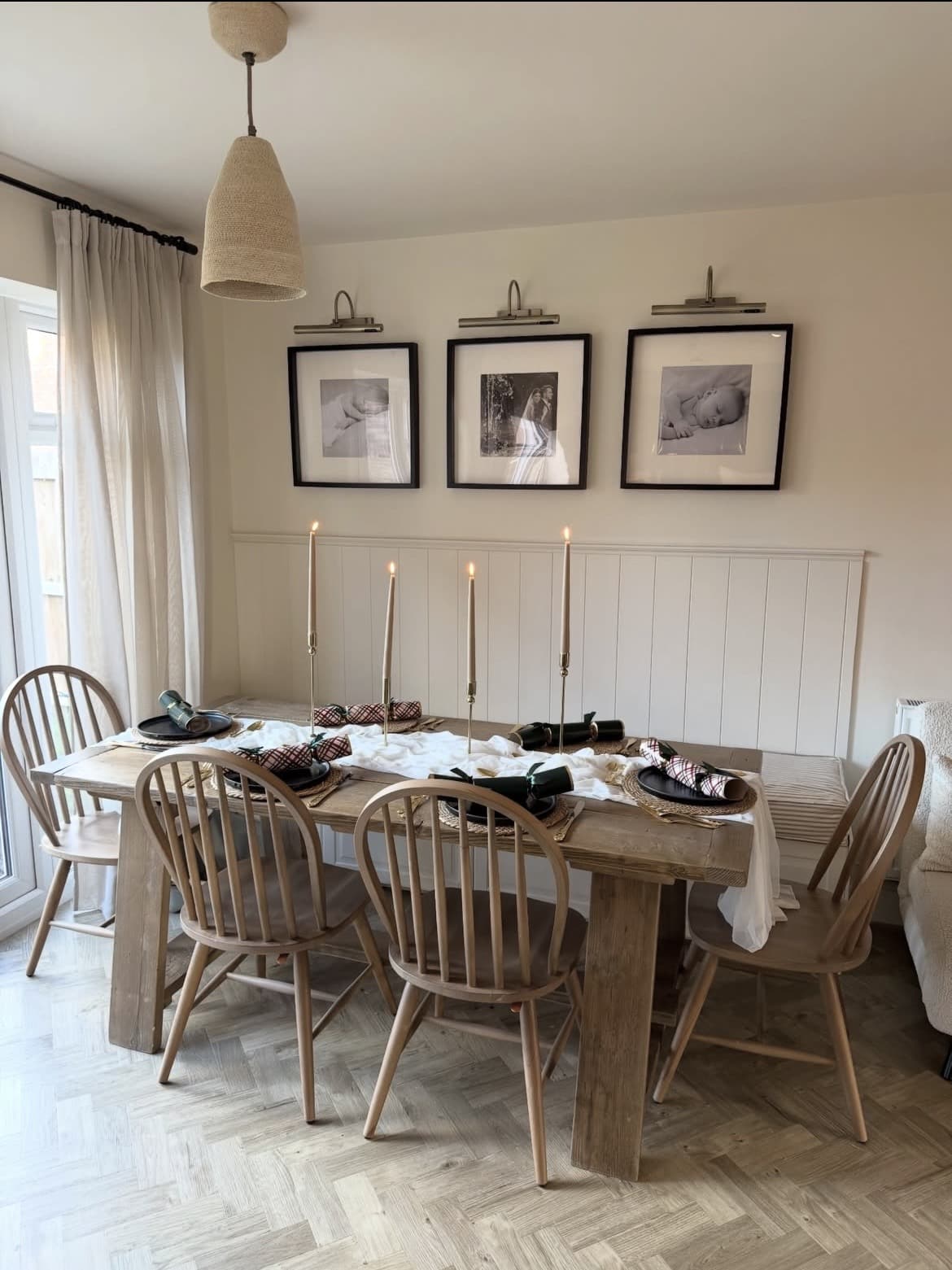
Wall panelling is always a good idea, and one that Scandinavian design uses quite heavily, specifically tongue and groove panelling.
A beautiful way to incorporate it into a style of banquette seating as shown in the image below. Paint it in the same shade as your walls for a flawless look that adds some beautiful character to the dining room.
5. Minimal Styling
One thing that both these synonymous design trends agree on is minimal styling. Clutter just isn’t a thing, and it helps bring some space and balance between items.
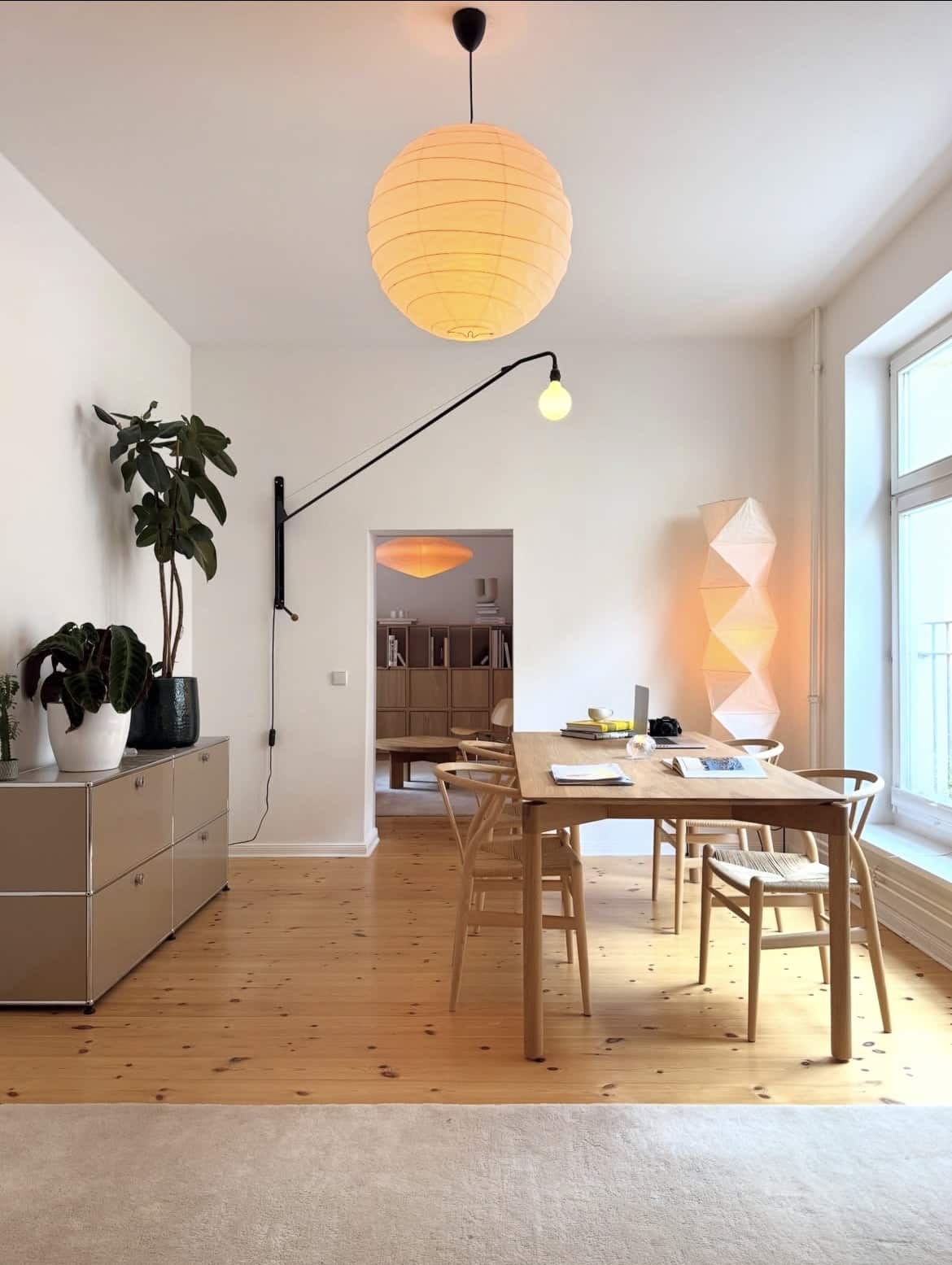
Focus on scaled up items, rather than adding too much. A large pendant light, a large house plant or foliage in a vase or simple pieces, less really is more here and it should be followed closely with Japandi style.
6. Floor Length Floaty Curtains
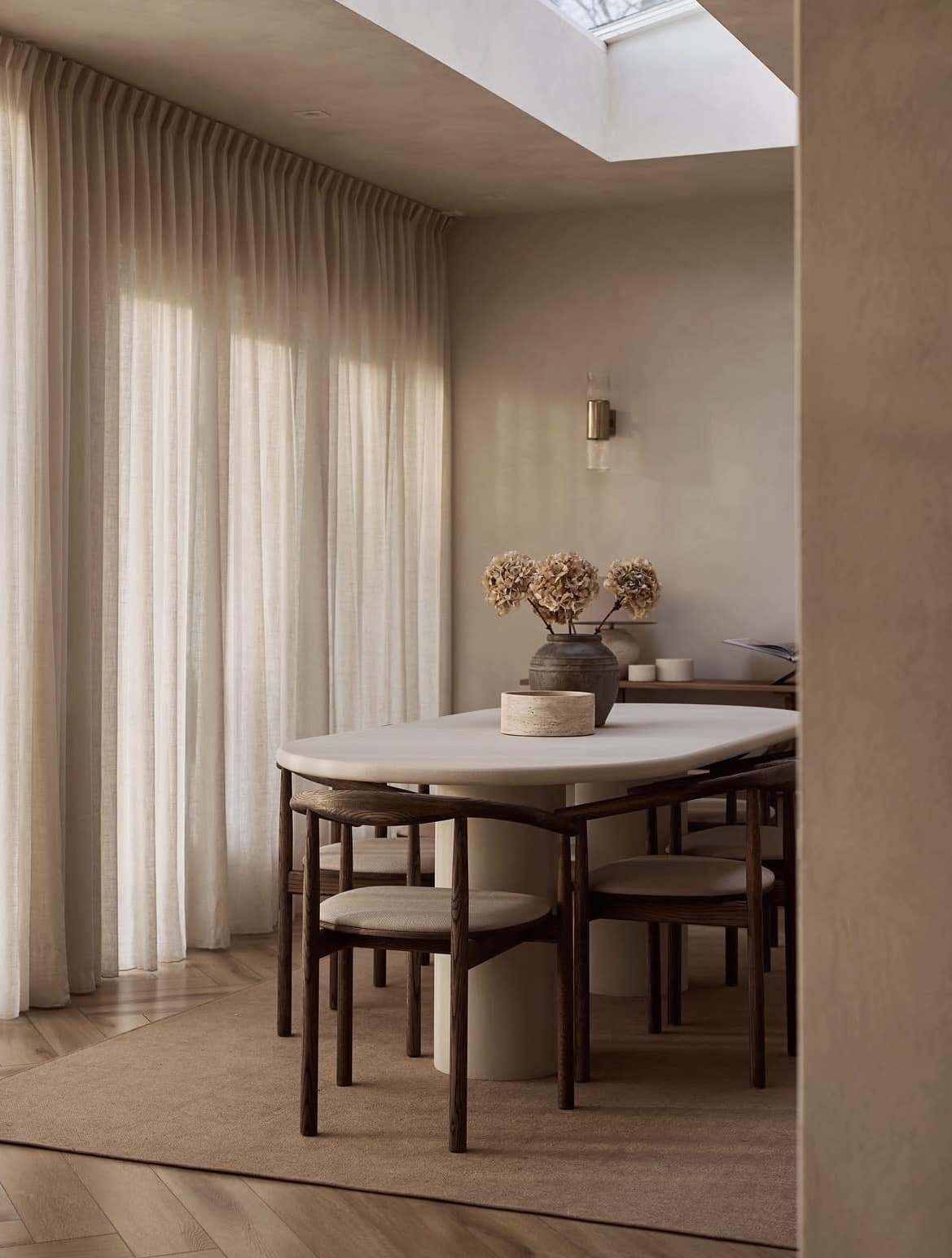
Diffusing light is a key thing in Japanese design, and they do it so well. The best way to achieve the look is to install tracks into the ceiling or hang your curtain pole as high as possible, this also helps to elevate the eye and make the room feel bigger than it is.
Use soft, floaty voile curtains, they diffuse light and create a really softy and floaty presence. Opt for an off-white colour rather than a clinical white for a softer feel.
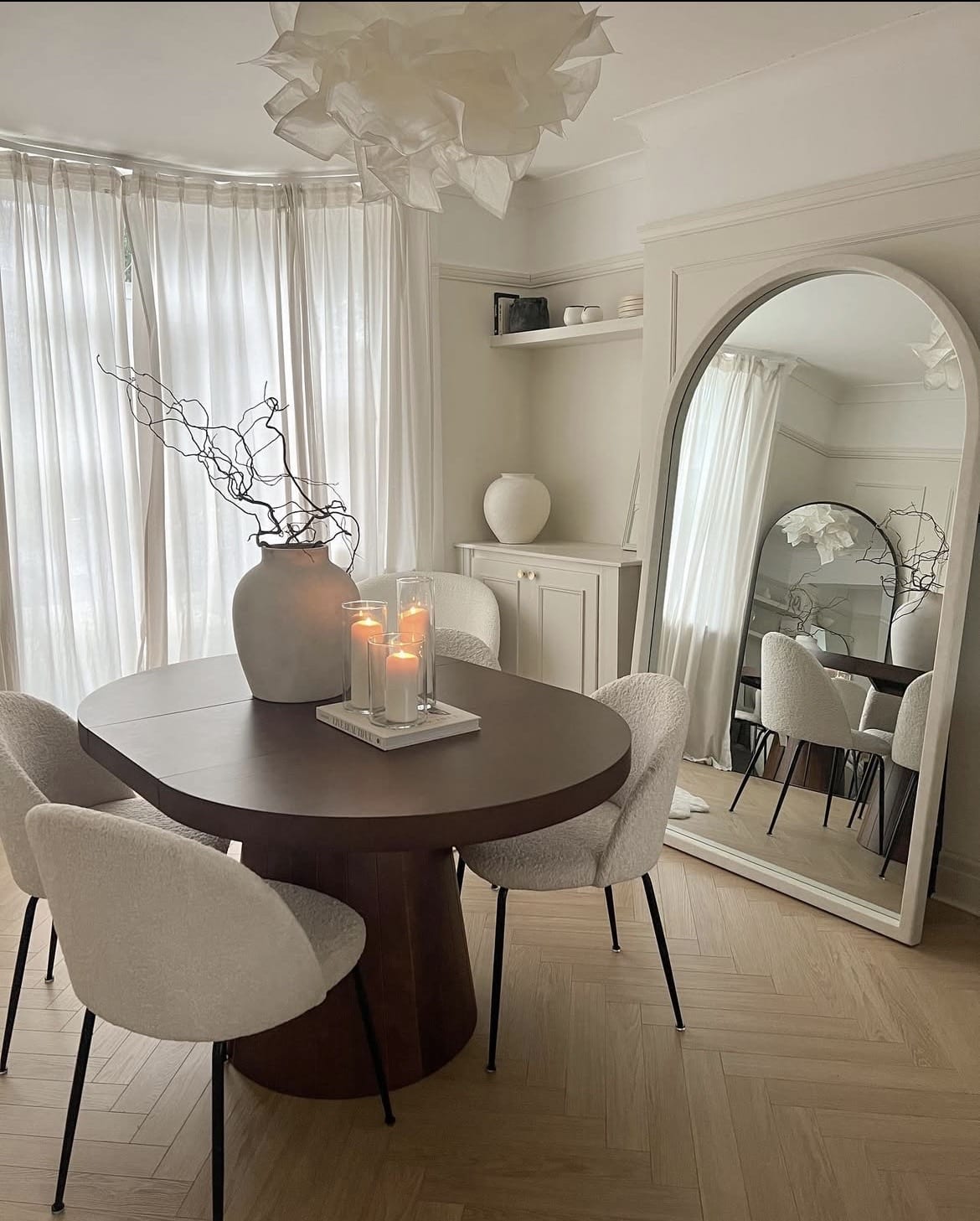
7. Bounce Light Around With A Large Mirror
Scandi interiors are very light and bright, so lean into this by adding a large mirror in your dining room. Curved mirrors cover both design disciplines here, it softens the look and carries the eye around.
Just make sure not to use a bog standard bright white in your dining room as bouncing light around a north facing room with bright white paint will make the colour feel even flatter, and cooler.
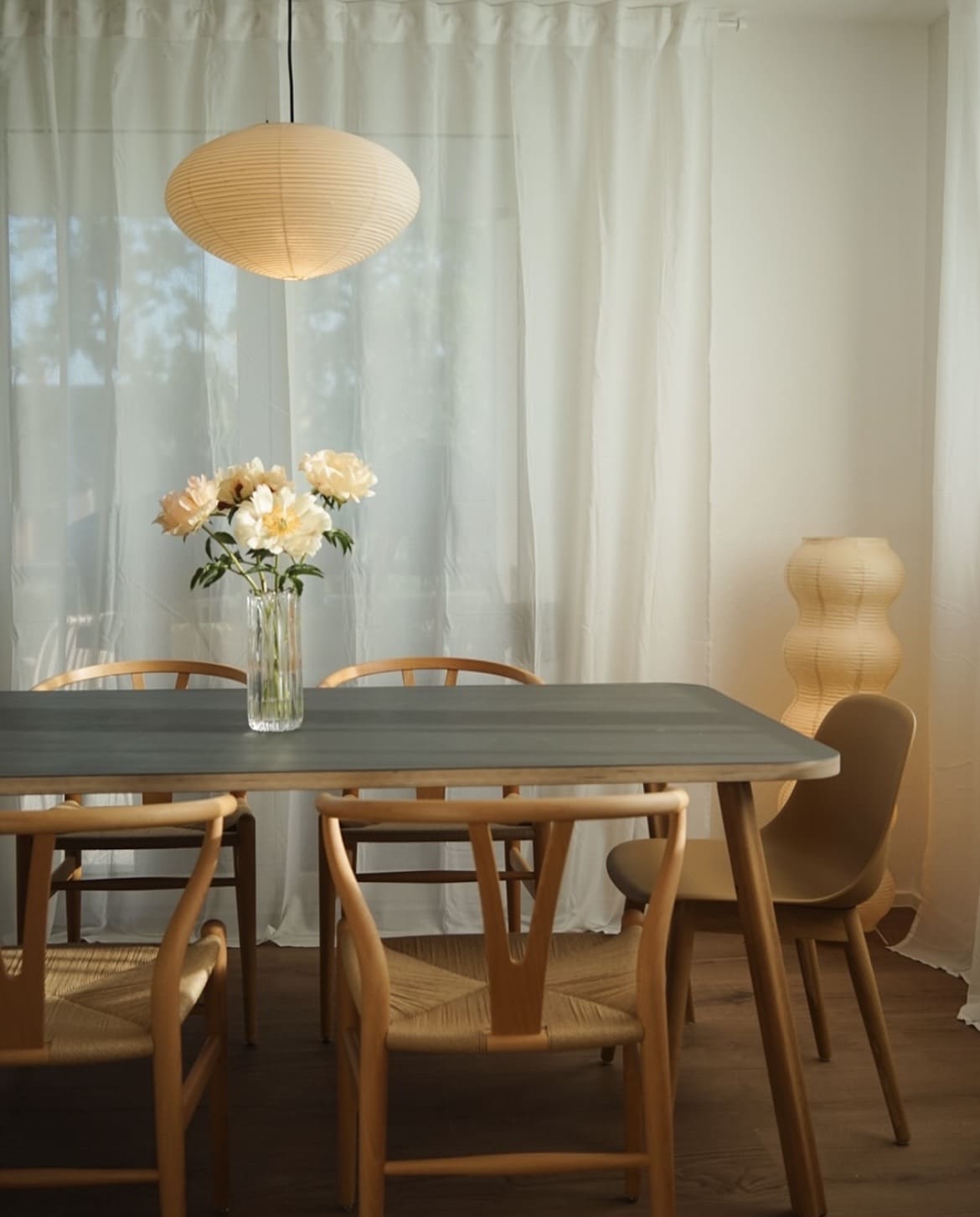
8. Statement Lighting
When choosing lighting for your dining room, scale up, and pick wisely! Use it to create a focal feature in your dining room, cylindrical and round lights like the below are a great choice because their fabric allows light to diffiuse through it beautifully, rather than casting a direct beam of light.
Flush mounted ceiling lights are very reminiscent of Japanese design and they create a wonderfully flawless look in a dining room that doesn’t detract attention from the rest of the room.
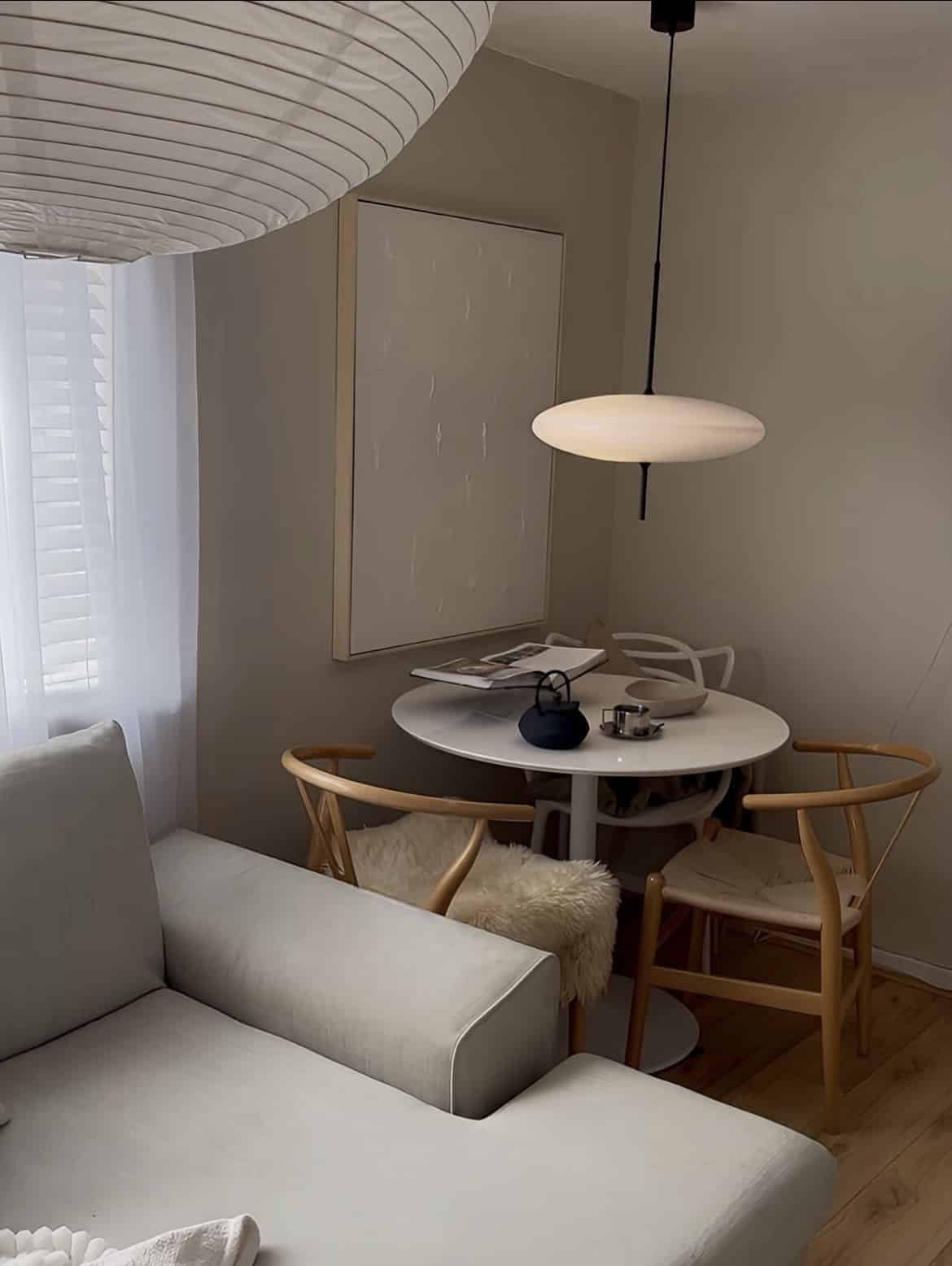
9. Cosy Nook
Your dining room can be what you make of it, and if you have an apartment or a home with limited space, make like the below and create a cosy dining room nook.
Round tables are best for this as they allow more bums to fit around a table without the obstruction that comes with a rectangular or square table. Do use soft throws on chairs to tap into the Scandi element.
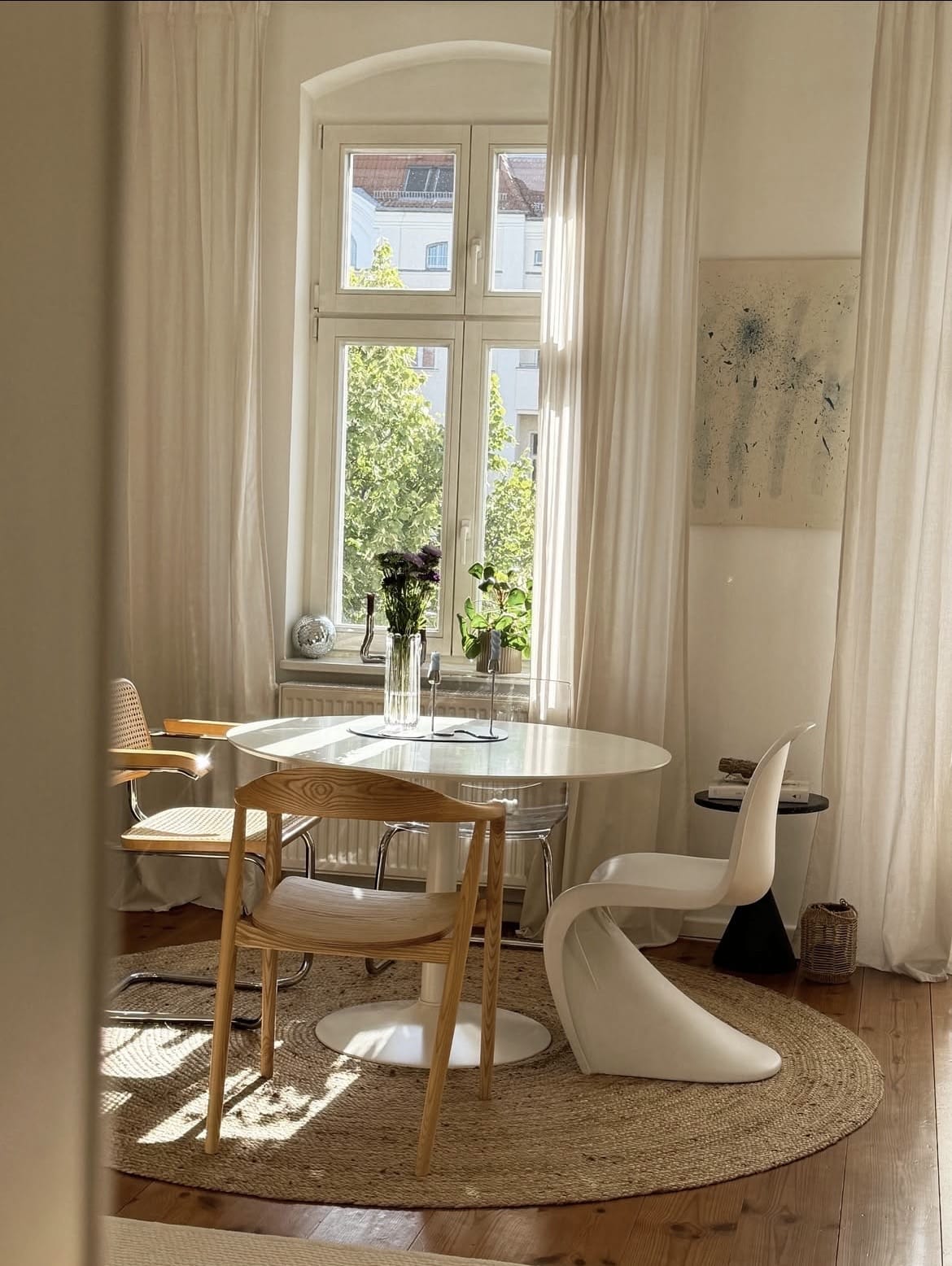
10. Lean Into Natural Lighting
Position your dining table next to a window to benefit from that glorious natural light!
The cast shadows from the sun will warm a room, but do think about installing some floaty curtains to diffuse that light when the sun is most intense to avoid the room feeling uncomfortable.
11. Scale Up
When choosing furniture, and specifically decor, I always recommend scaling up!
When you fill a dining room (or any space for that matter) with items that are too small, it makes the room feel even more inferior. When you have a small dining room, it may feel counter intuitive, but do it with the right items and it will work a treat! Focus on scaling up on decor items such as lighting, plants and foliage to really benefit from this design trick.
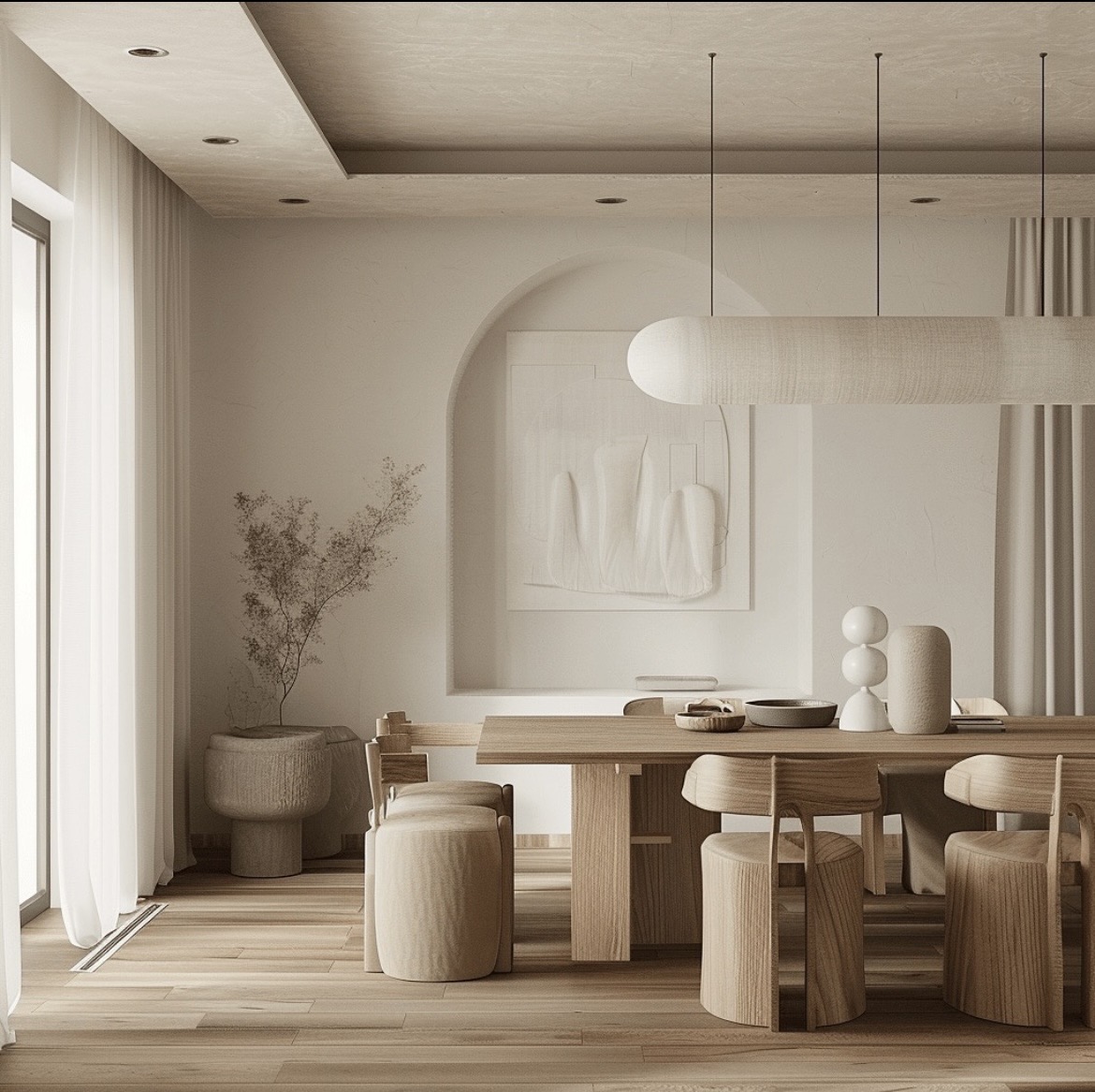
12. A Row of Odds
Japandi nailed in this dining room below! You might consider a row of hanging pendants rather than a singular light fitting and this can be a great way to instil added interest and ambience.
This look is very popular with kitchen islands, but also works well with a dining table. When hanging pendants in this manner, odds generally look best, so think three or five pendants. It creates a better and more symmetrical balance between each of the lights.
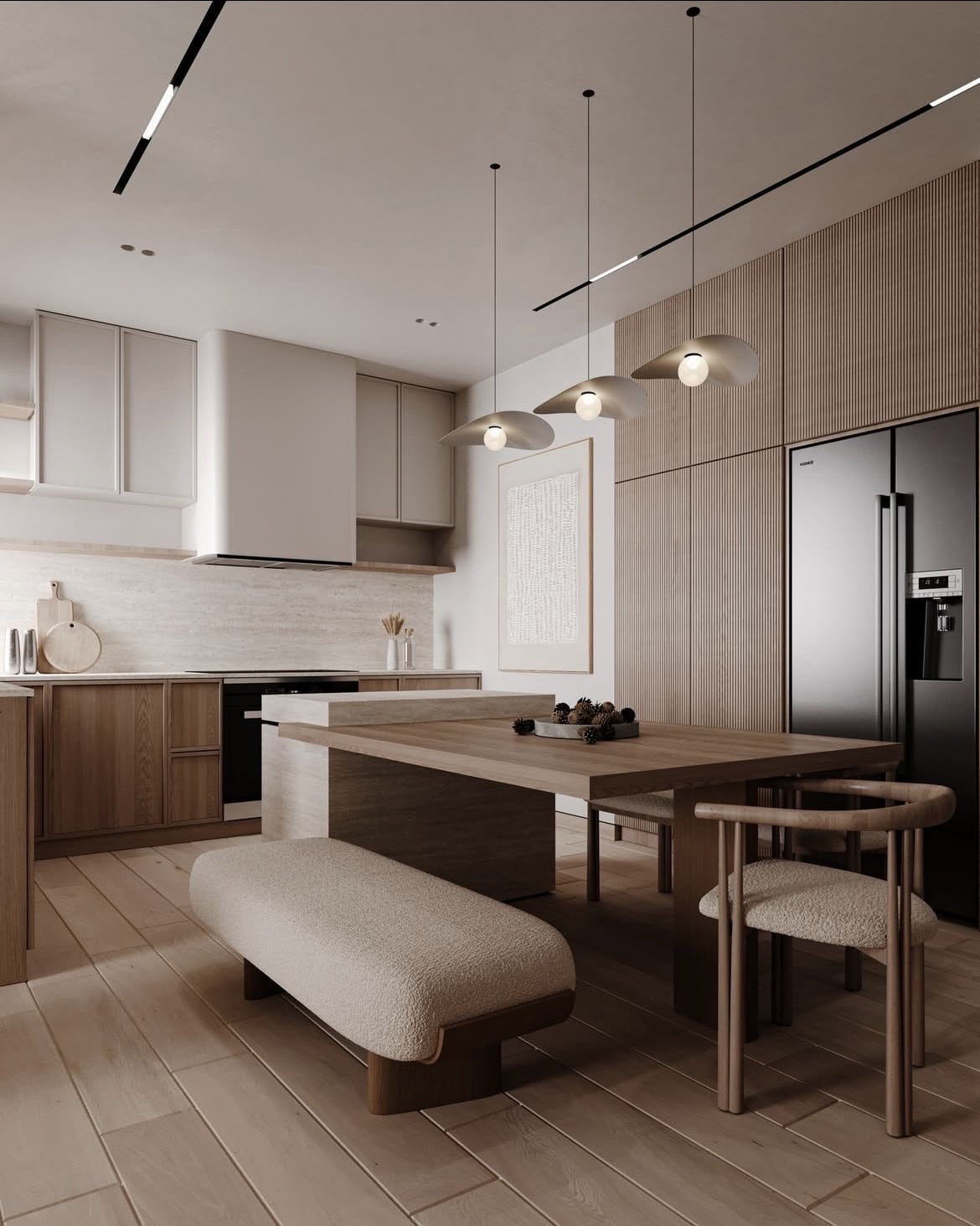
13. Ground The Room With A Large Area Rug
Complete your dining room with a large area rug, placing beneath your dining table and ensuring that your chair legs sit comfortably onto the rug with a generous margin from them.
An area rug is designed to ground the room, brings warmth and interest to a space. Natural based rugs such as jute and wool are ideal for Japandi design.
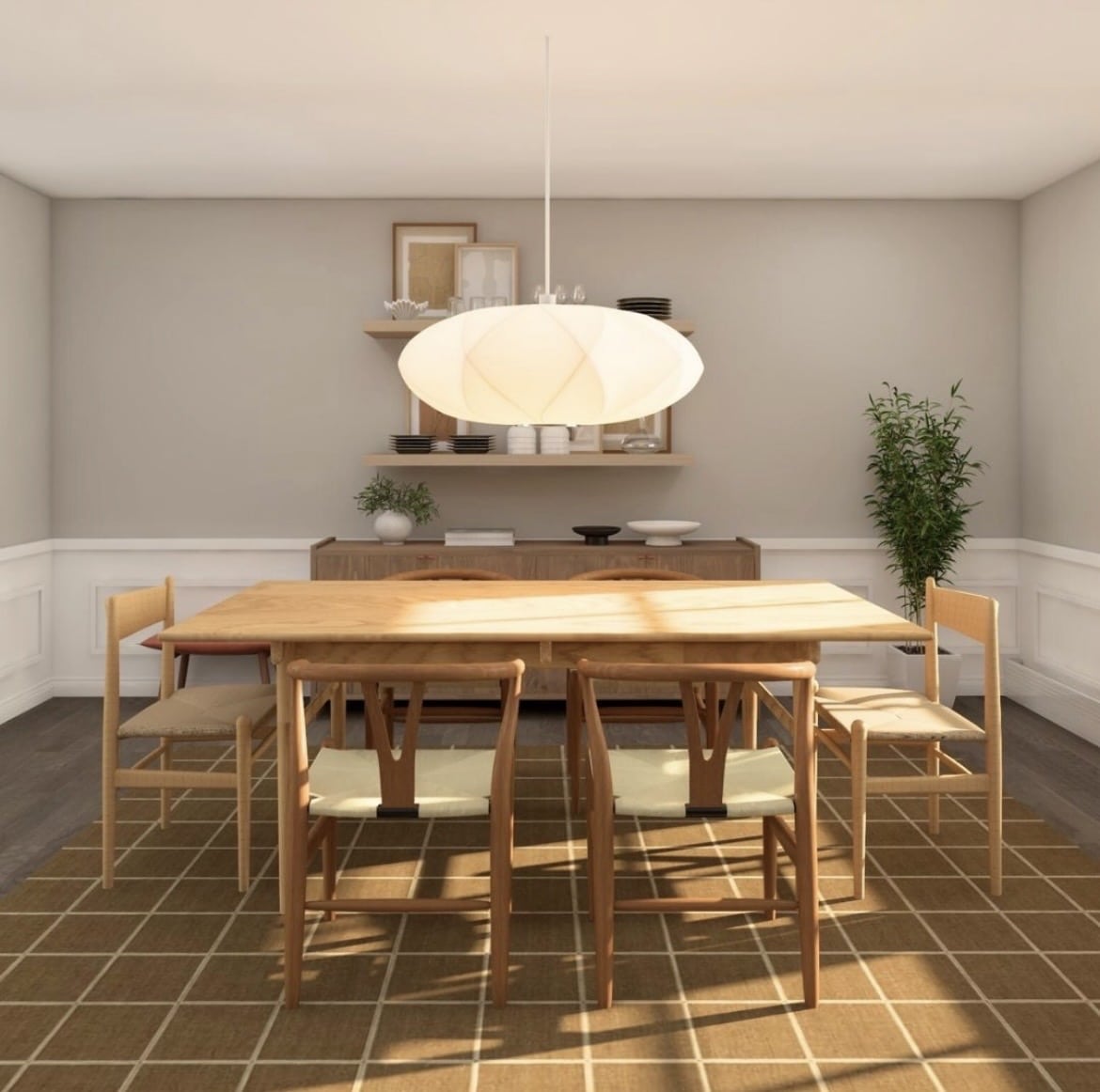
14. Warm, Soft Whites
Instead of reaching for a bright white paint, lean into warm, soft whites too. It can feel overwhelming when there are virtually 100s of white shades on the market, but the shade you choose really makes a difference.
Look for white shades that carry a yellow, red or pink undertone, it gives them a touch of natural warmth that will make even cold, north facing rooms feel cosy and uplifting.
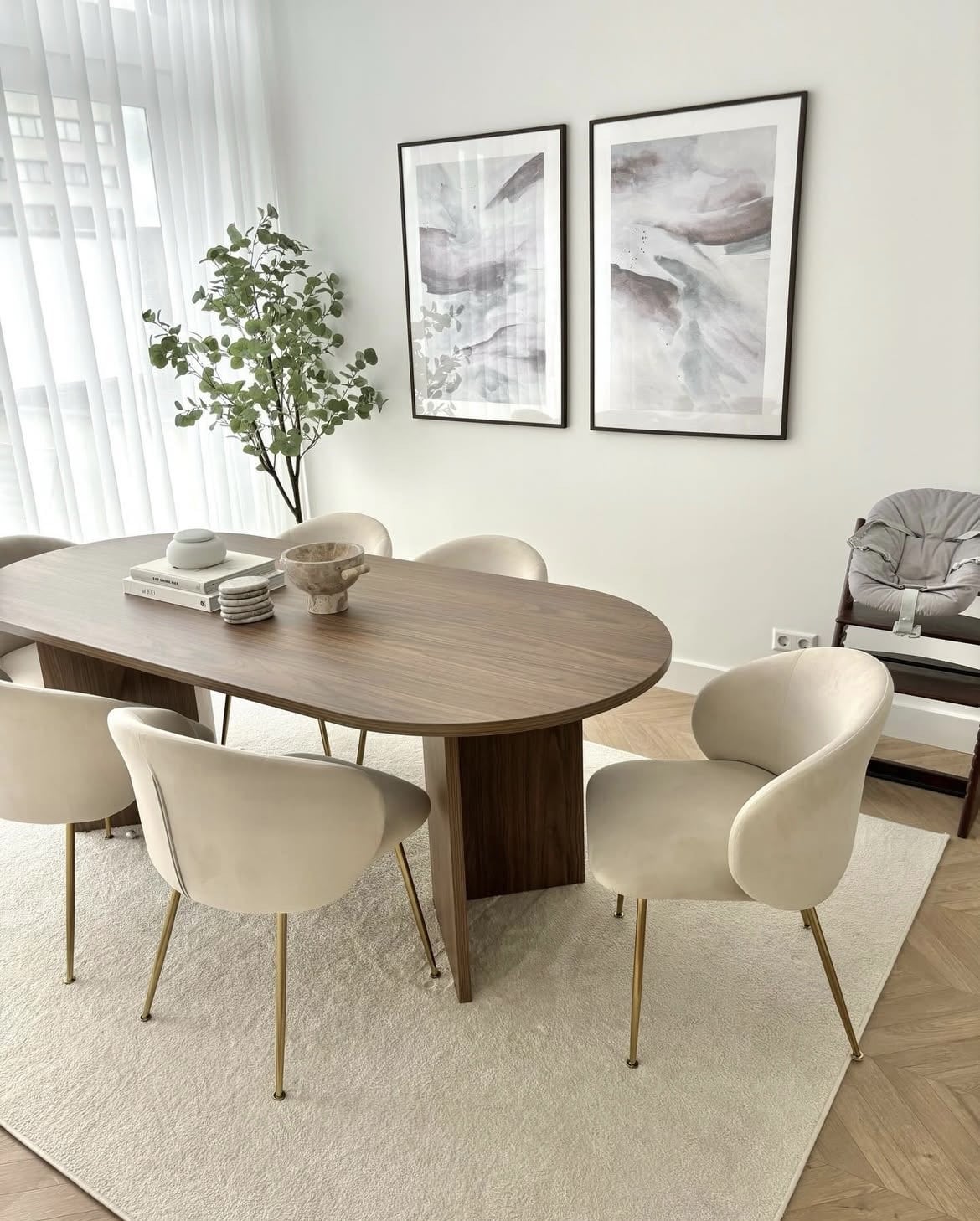
15. Foliage Displays
We’re going back to the scale up design trick again, and doing this with foliage displays is a must!
Not convinced? Just take a look at the below dining room! Go for a large vase or pot, and add extravagant stems (real are best, but faux are okay if you can find some that don’t look overly fake). Let it do the talking on your dining table, you don’t need to add anything else!
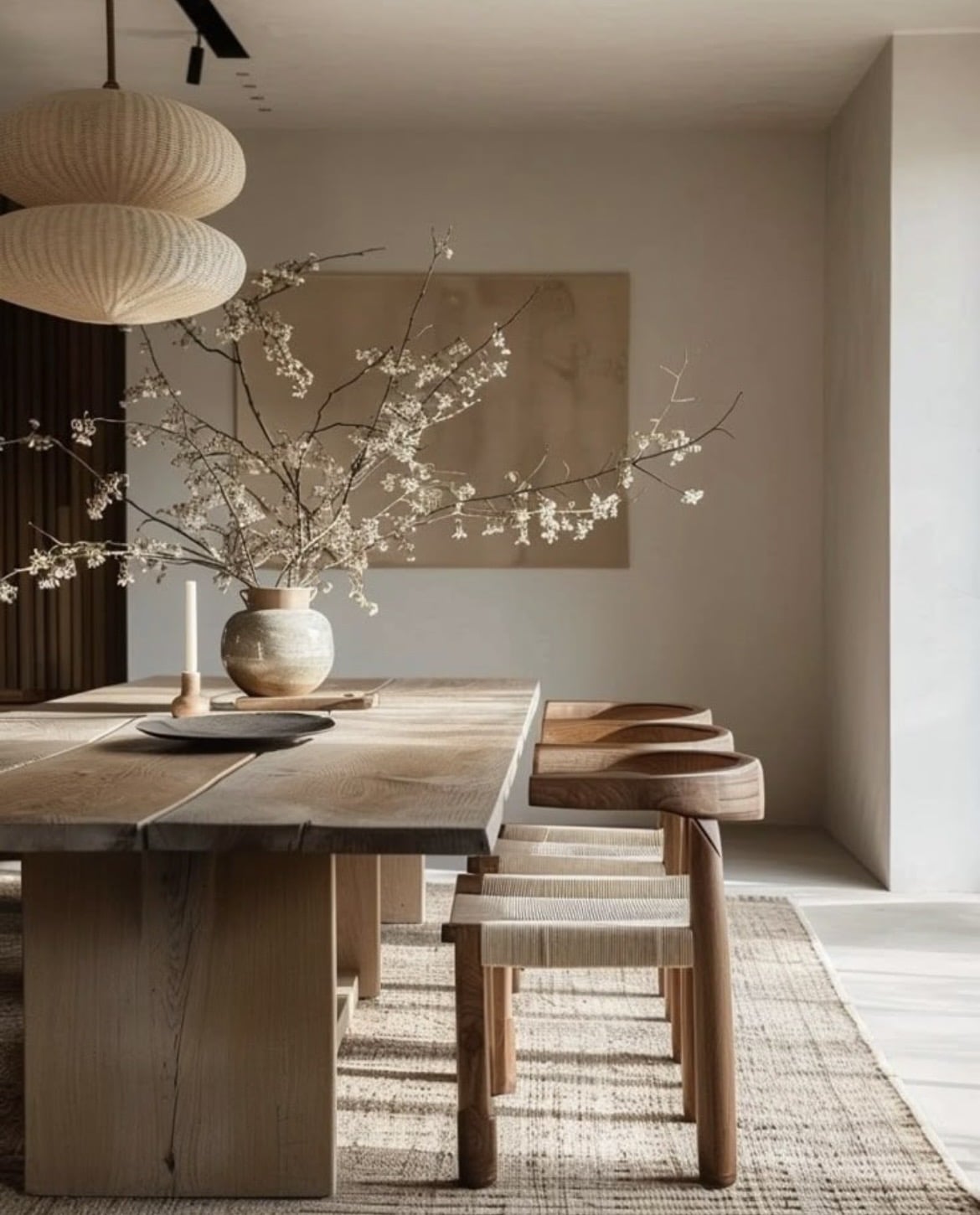
16. Natural Wooden Elements
You can never go too far wrong from featuring a lot of wood in your design, not only does it look incredible, but its enduringly timeless. Wood is not a trend, nor is it a fad, and it will stand the test of time in a combined kitchen/dining room.
Use a similar wood finish throughout, or vary tones slightly for added interest.
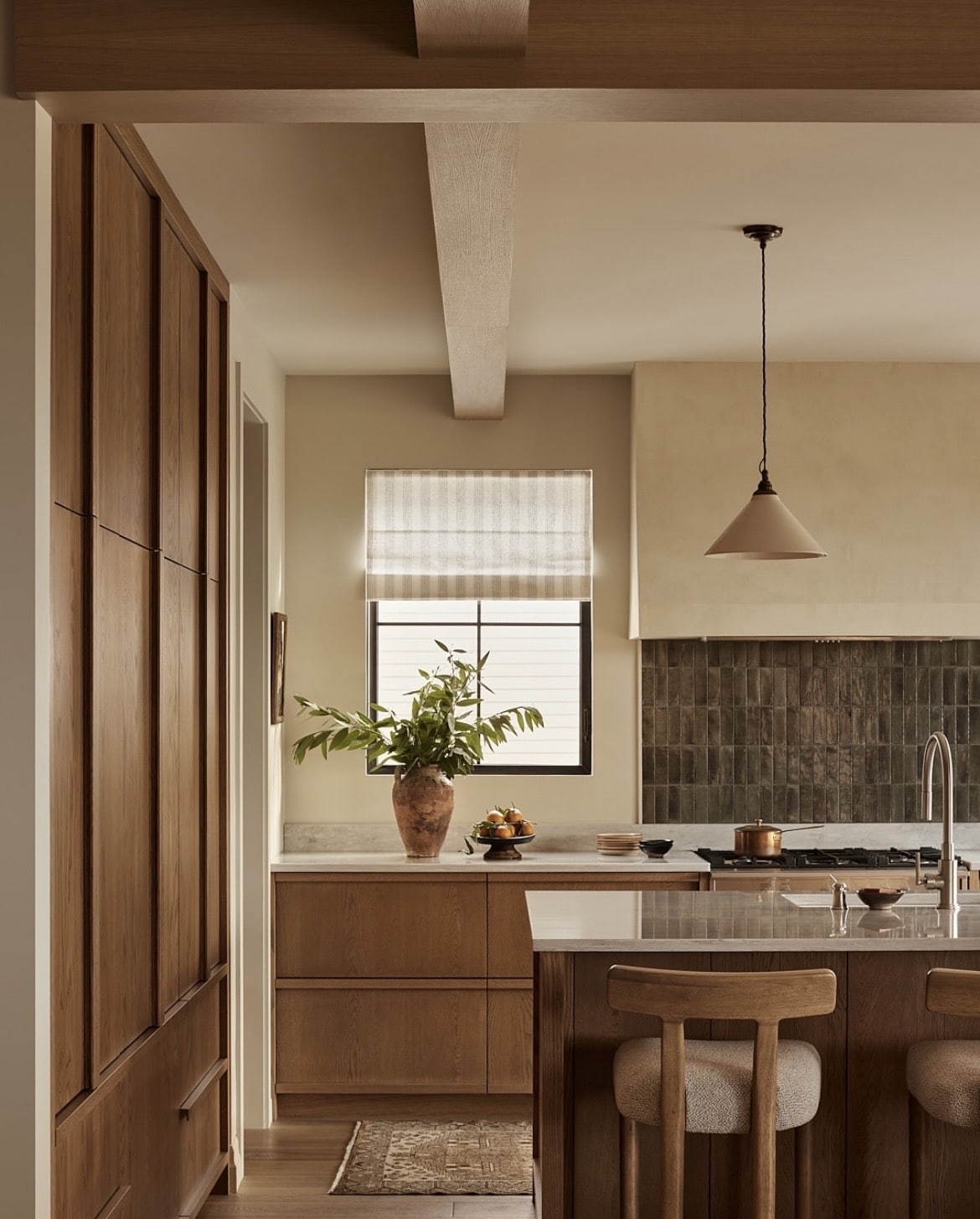
17. Black Design Elements
Black is a colour that works invariably well in most design trends, but it brings Japandi to life! Black is featured in small doses in both Japanese and Scandinavian designs, but you only want to treat it as an accent colour.
Use sparingly on items such as dining chairs, light fittings or small decor accessories. Black grounds a colour scheme and where a lot of neutral and white tones are used, it adds definition and interest.
18. Limewash Walls
Limewash is a very popular wall covering that works beautifully in a Japandi designed interior. Traditional plaster is not used in Japan for a number of reasons, yet a limewash style plaster is used as it’s more flexible to movement and carries a lovely texture and interest.
Use it on just a feature wall like styled below, or fully hand yourself over to this trend and use it on all of your walls.
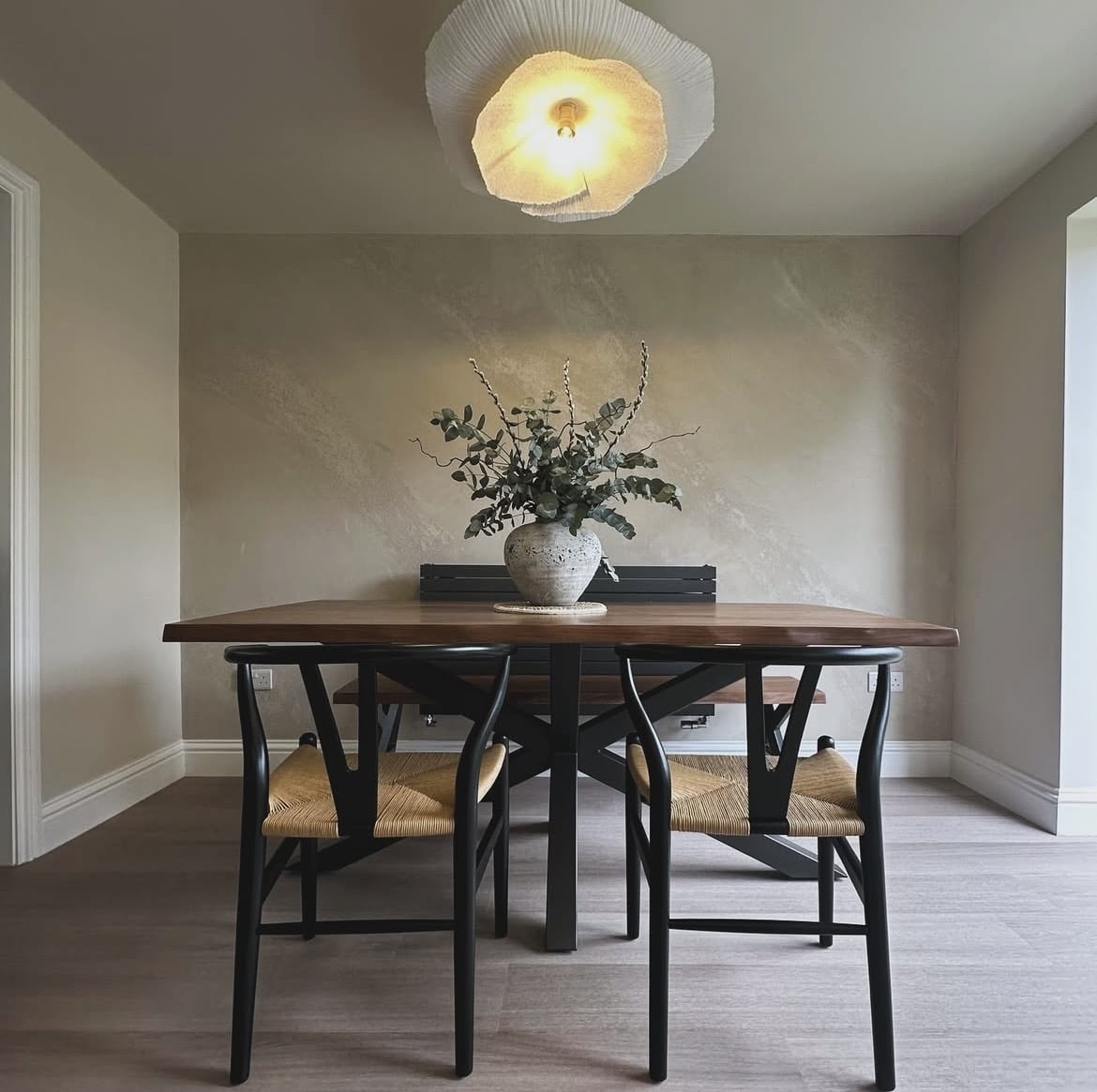
19. Touches of Greenery
Notes of green are a welcome element in Japanese design, it keeps the space rooted in nature and well, green feels good to be around!
An easy way to tap into this aspect is to include some real greenery with a house plant or some foliage from your garden, display it on your dining table for cost effective style that looks beautiful.
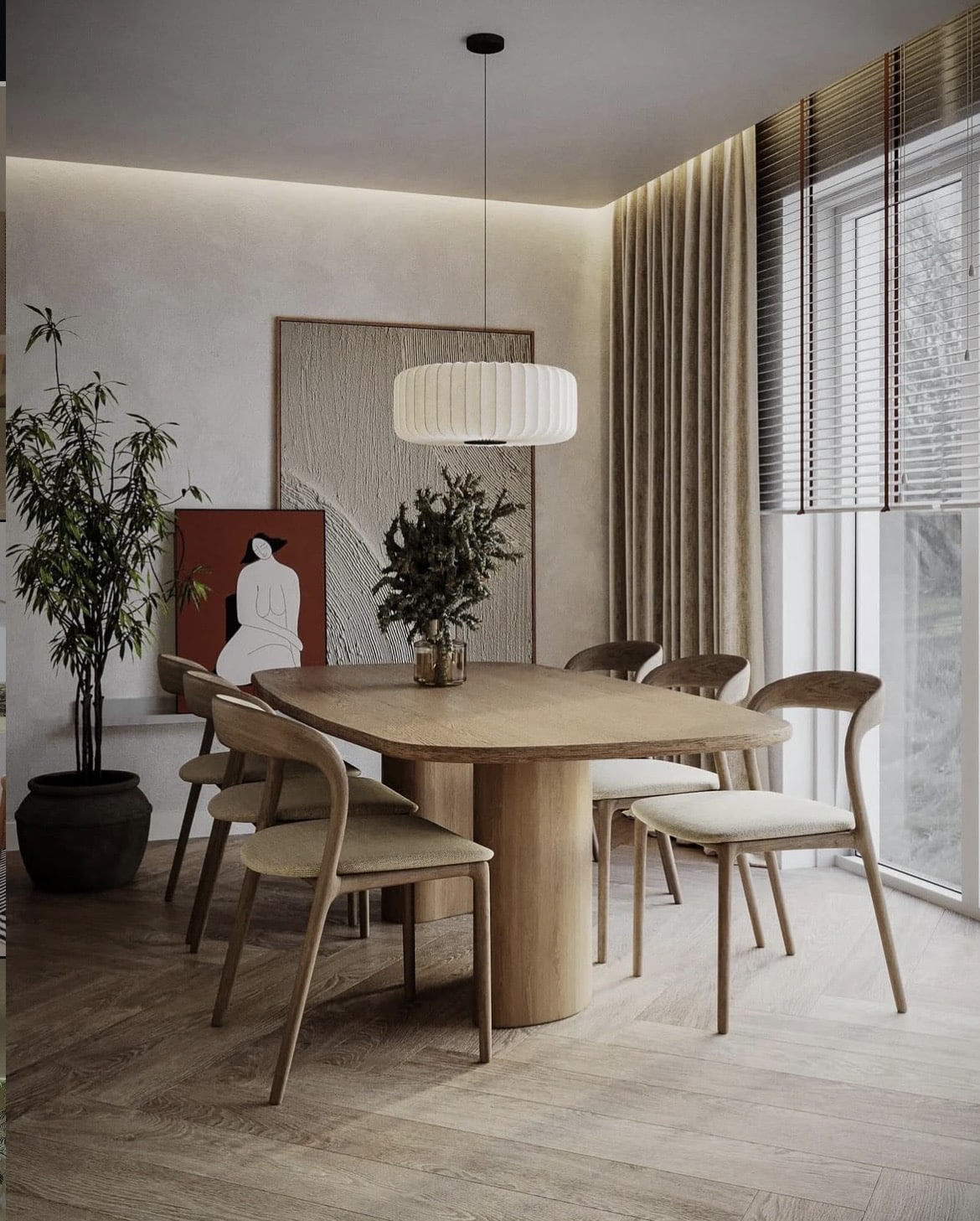
20. Sympathetic Styling
Pay homage to these design trends by styling in a sympathetic, conscious way. Less is more, but it’s also considered.
Think of what the space practically needs first and only add items that speak to the colour scheme and co-ordinate well. Layering with tonal colours is a way you can’t go too far wrong from!
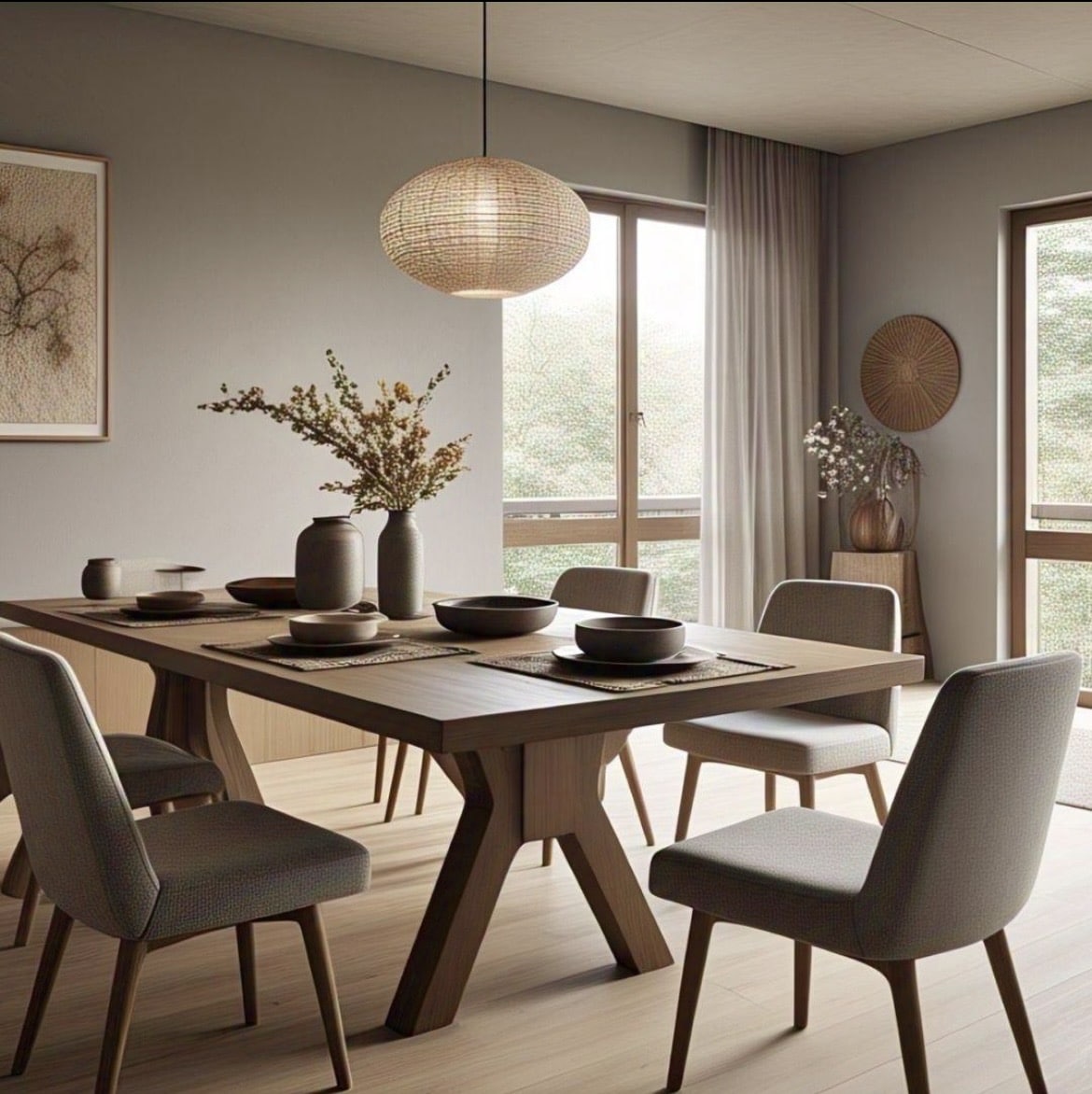
21. Soft, Warm Neutrals
A warm neutral colour scheme will help you to adopt this relaxed and stylish design trend. Instead of whites, look at creamy off-whites and beiges that bring instant warmth to your walls.
For a bit more depth, consider using soft browns, and even warm greys to help uplift a dining room.
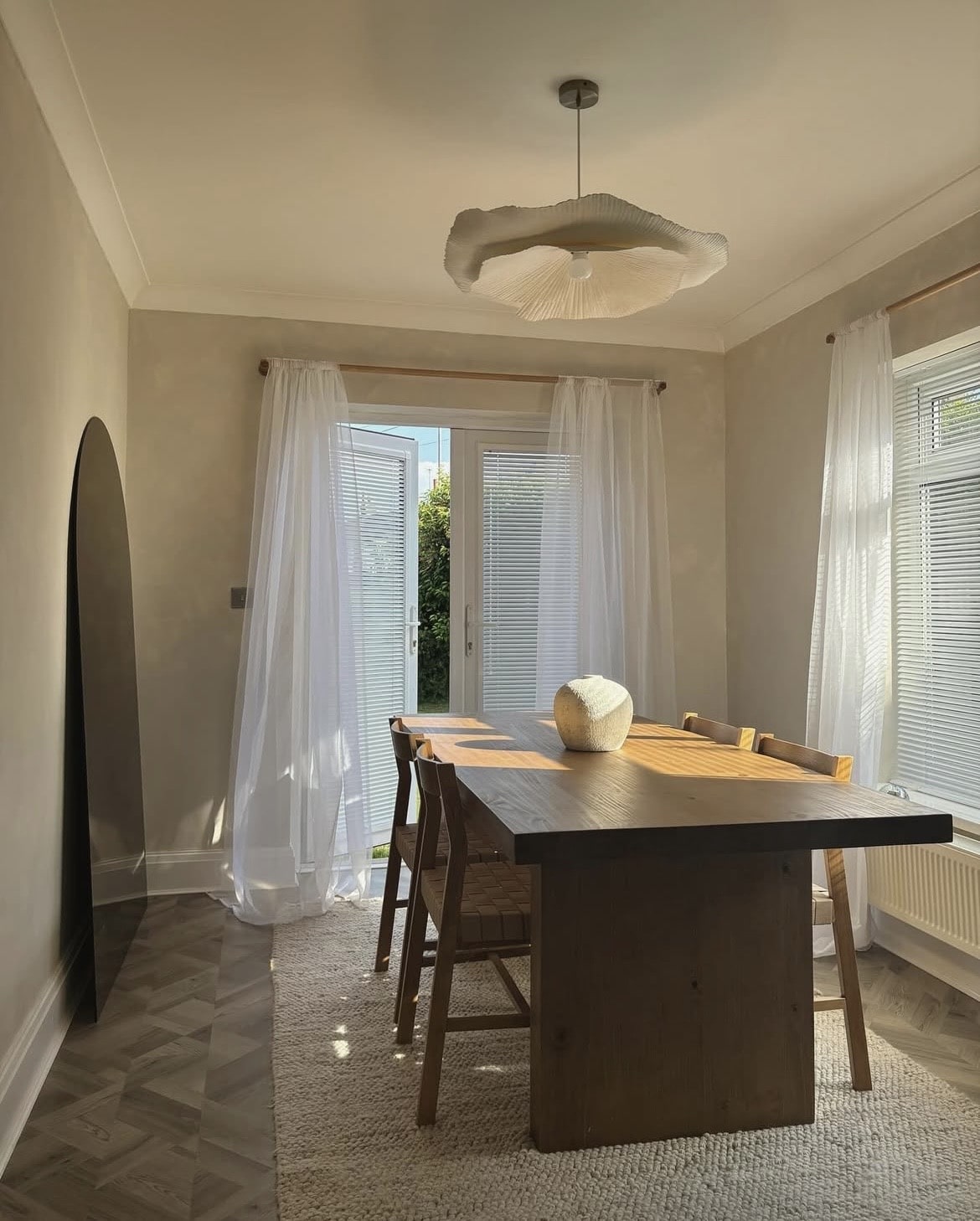
22. Layer Tonally Relevant Colours
This is another example of how to tastefully execute layering tonally relevant colours in a dining room. The idea is to not use the same shade throughout as it’s a fasttrack way to create a boring, flat scheme.
Instead, incorporate other colours through textiles and accessories with slight shade nuances, it will create a much more interesting colour scheme.
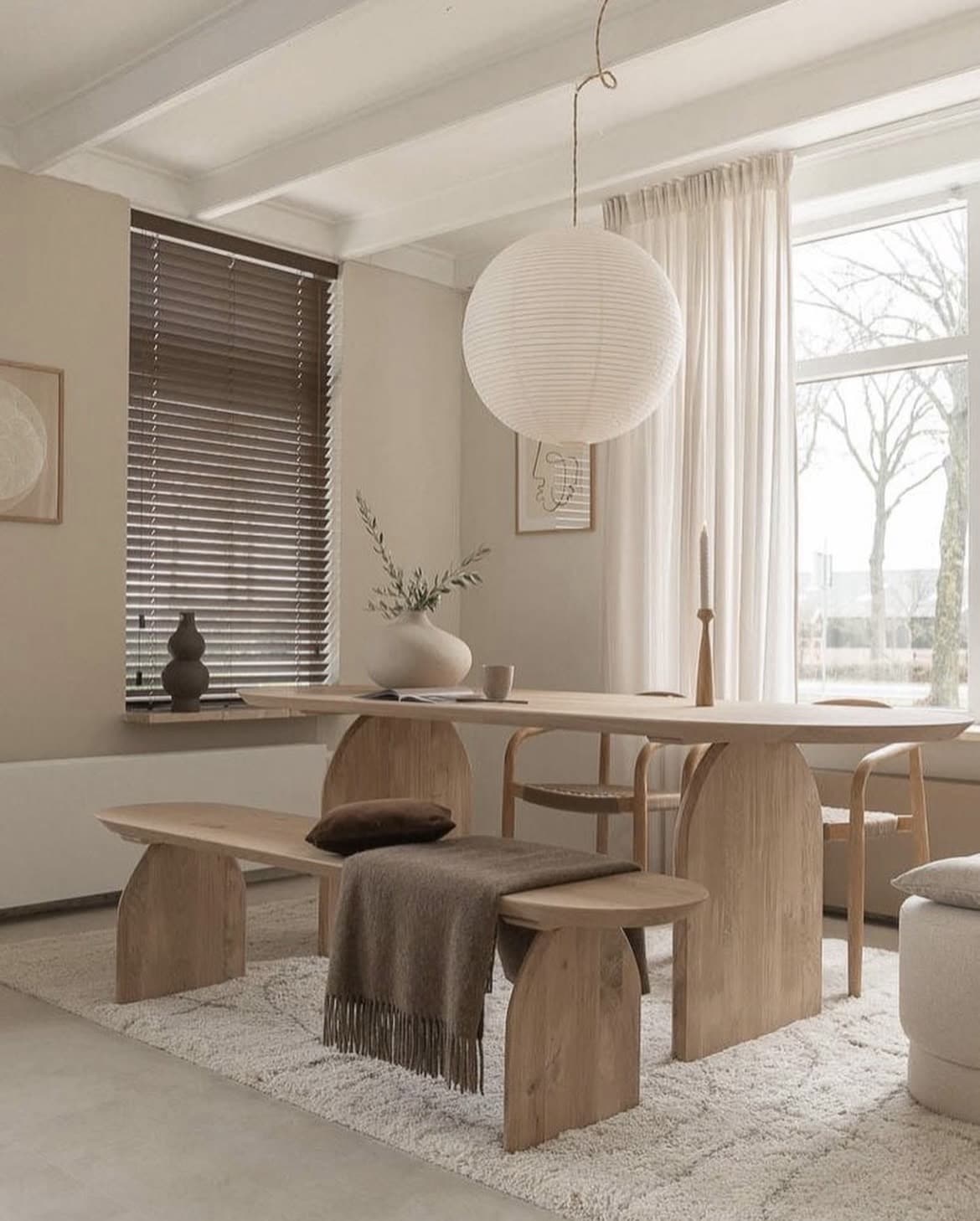
23. Mix Tones of Wood For Interest
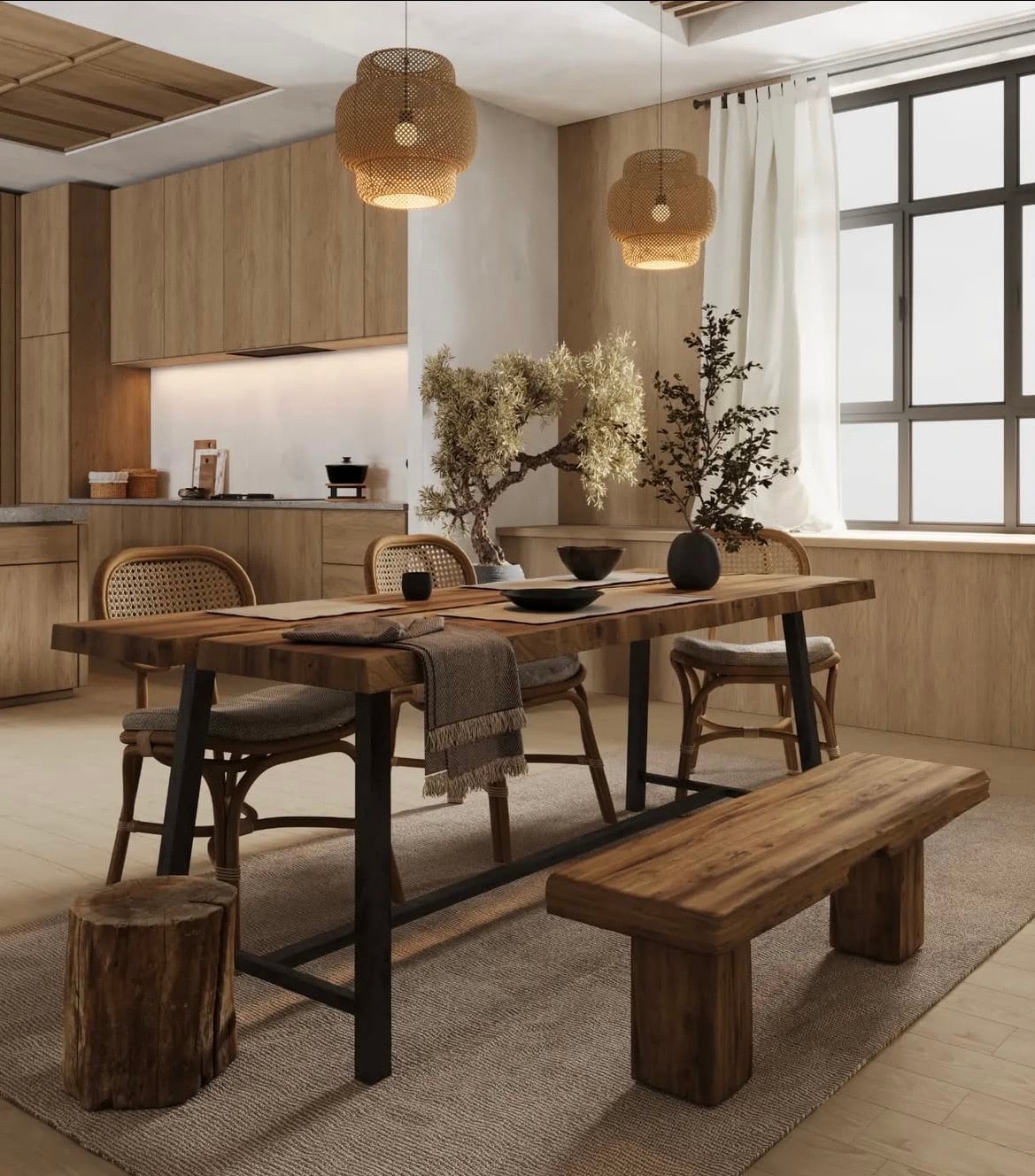
If you’re not too sure how to mix wooden tones, take inspiration from the below dining room! The best way to do this is to ensure you’re only introducing between 2-3 different shades of wood, any more and it will look chaotic.
The below uses a different type of wood for kitchen cabinetry and a dining table in a slightly darker wood which adds some lovely definition to the space.
24. Elevate With Luxury
You can be as luxurious as you want with finishes in a Japandi dining room. If you want a more elevated look, instead of lots of wood features, consider another natural element such as marble, stone or granite.
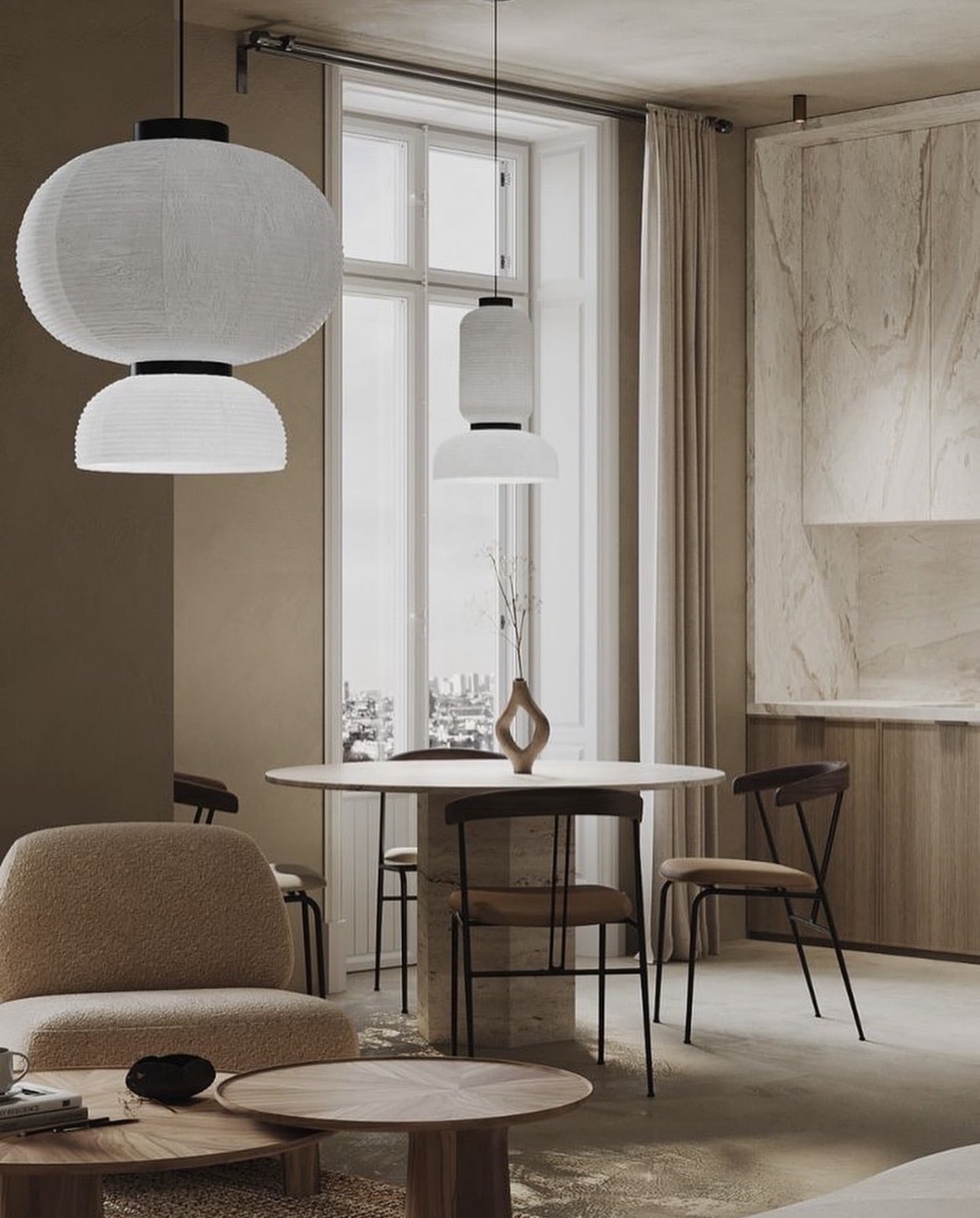
25. Keep Things Simple
A gorgeous light fitting and a foliage display is sometimes all you need to style a dining room. The less decor you use, the more space there is between one another which allows you to breathe in a space, and feel comfortable.
There is a term in Japanese called Ma (間), this is a foundational concept in Japanese which translates to a gap, space or a pause. It gives meaning to the whole act in many areas of Japanese life, including interiors and architecture. This negative space is what allows breathing and balance.
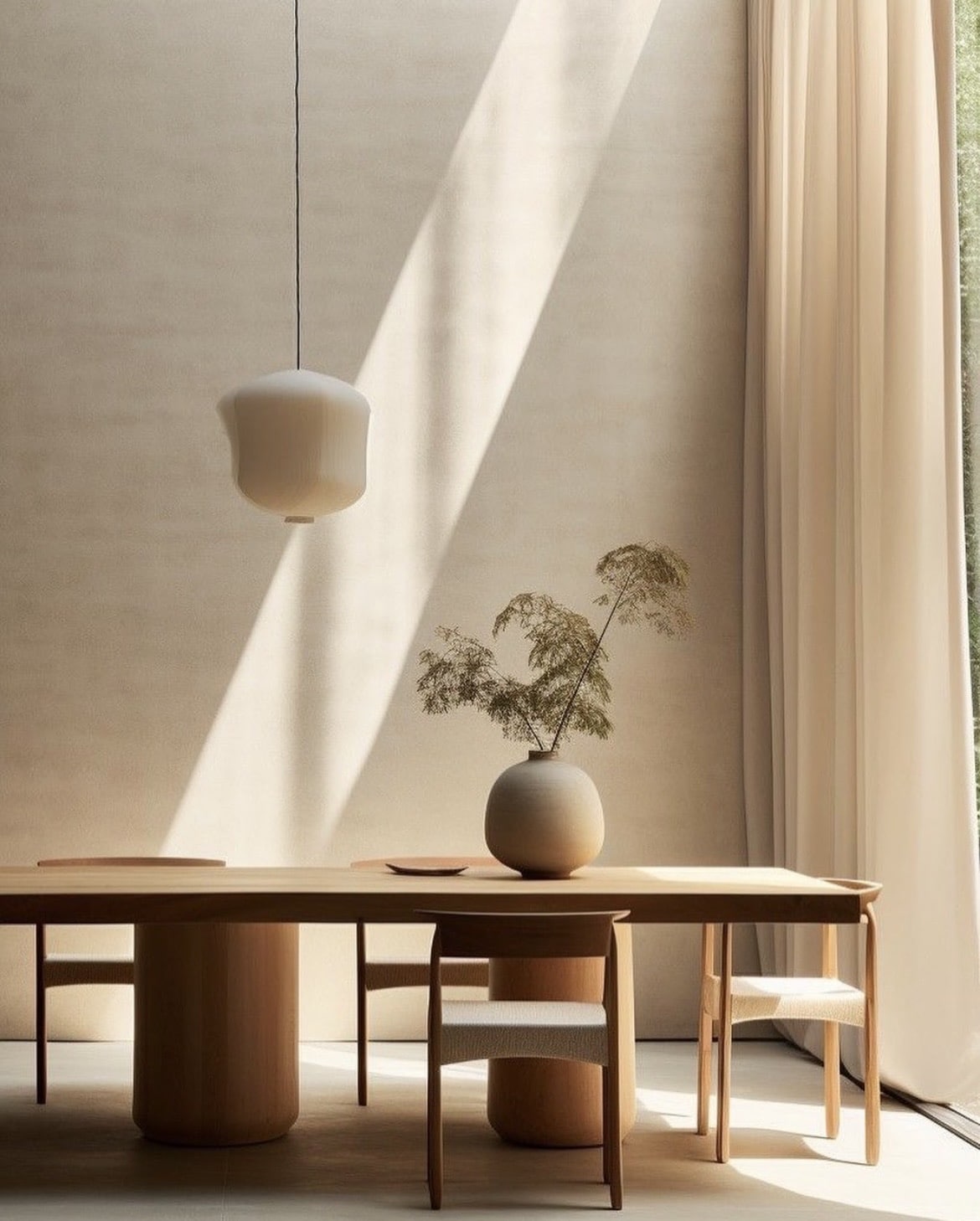
26. Add A Bohemian Twist
Use Japandi as your main influence, but don’t be afraid to introduce a twist of your own. The below dining room adds more of a bohemian feel which makes it feel more eclectic, and lived in.
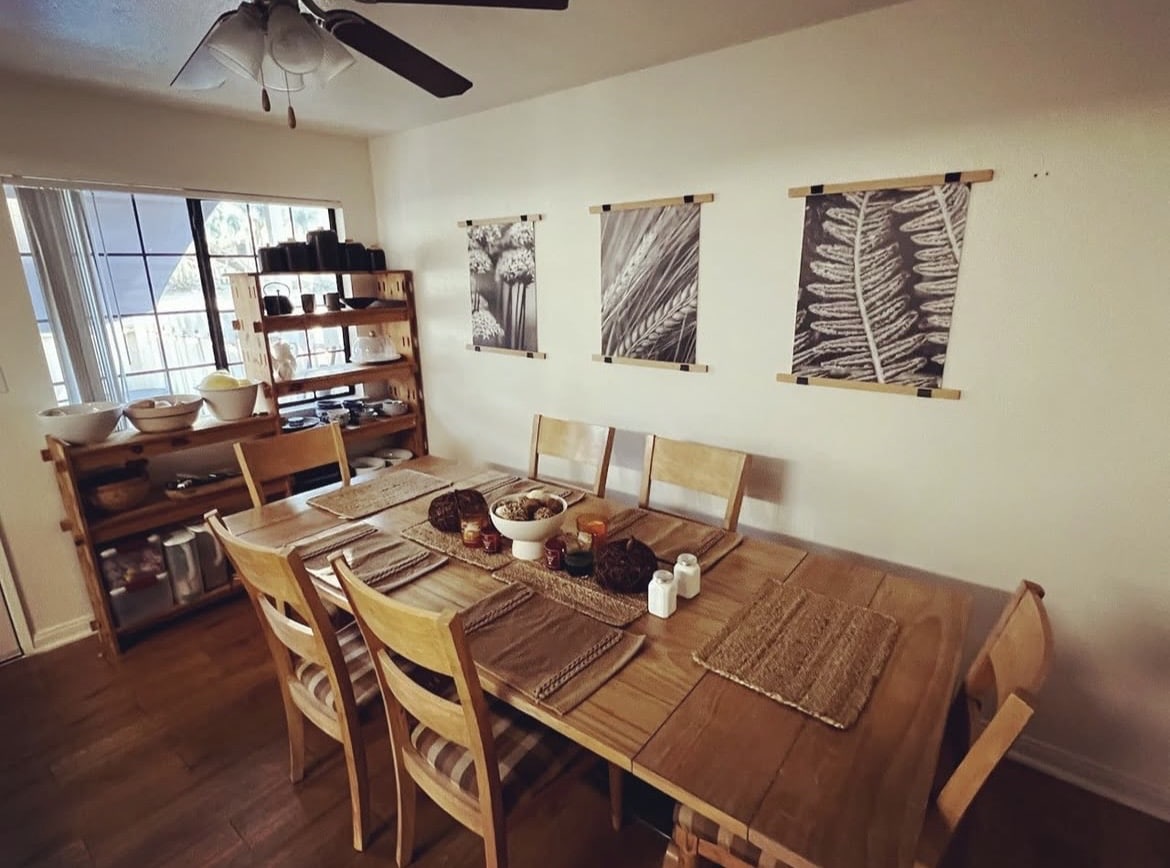
27. Focus On Curves
Round curves are the word in Japandi design. They help to soften an overall space and when it comes to items such as dining tables, they’re so much more suited to smaller dining rooms that have limited space.
Carry curves through on your lighting, decor and beyond.
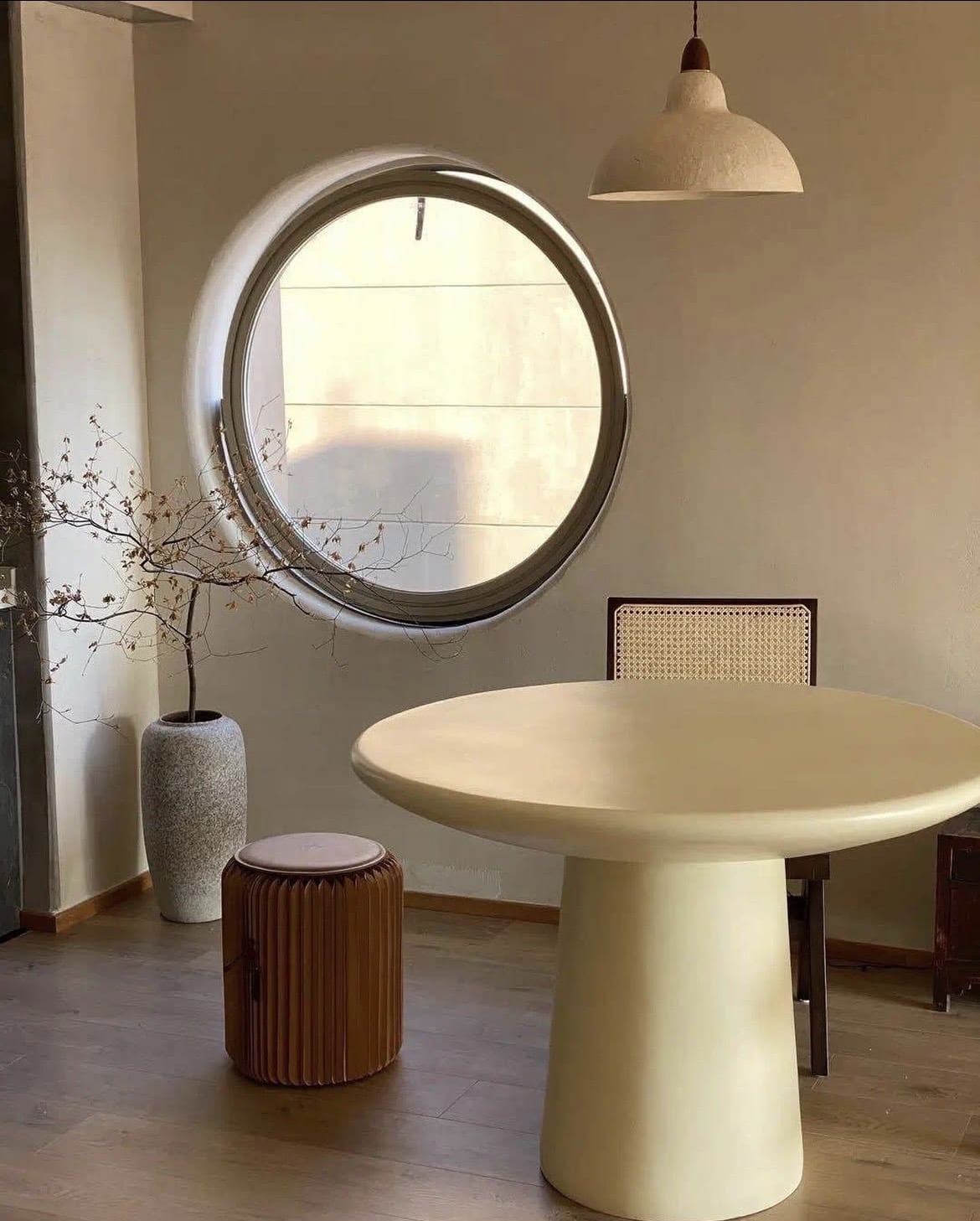
28. Don’t Be Afraid To Use A Touch of Colour
Whilst Japandi is firmly rooted on neutral, subtle colours, adding in a pop of colour can help to keep things interesting, and allow you to create your own personal stamp on a dining room.
An area rug is a great way to do this as it grounds the colour scheme and brings some fun definition. Checkerboard is always a good idea!
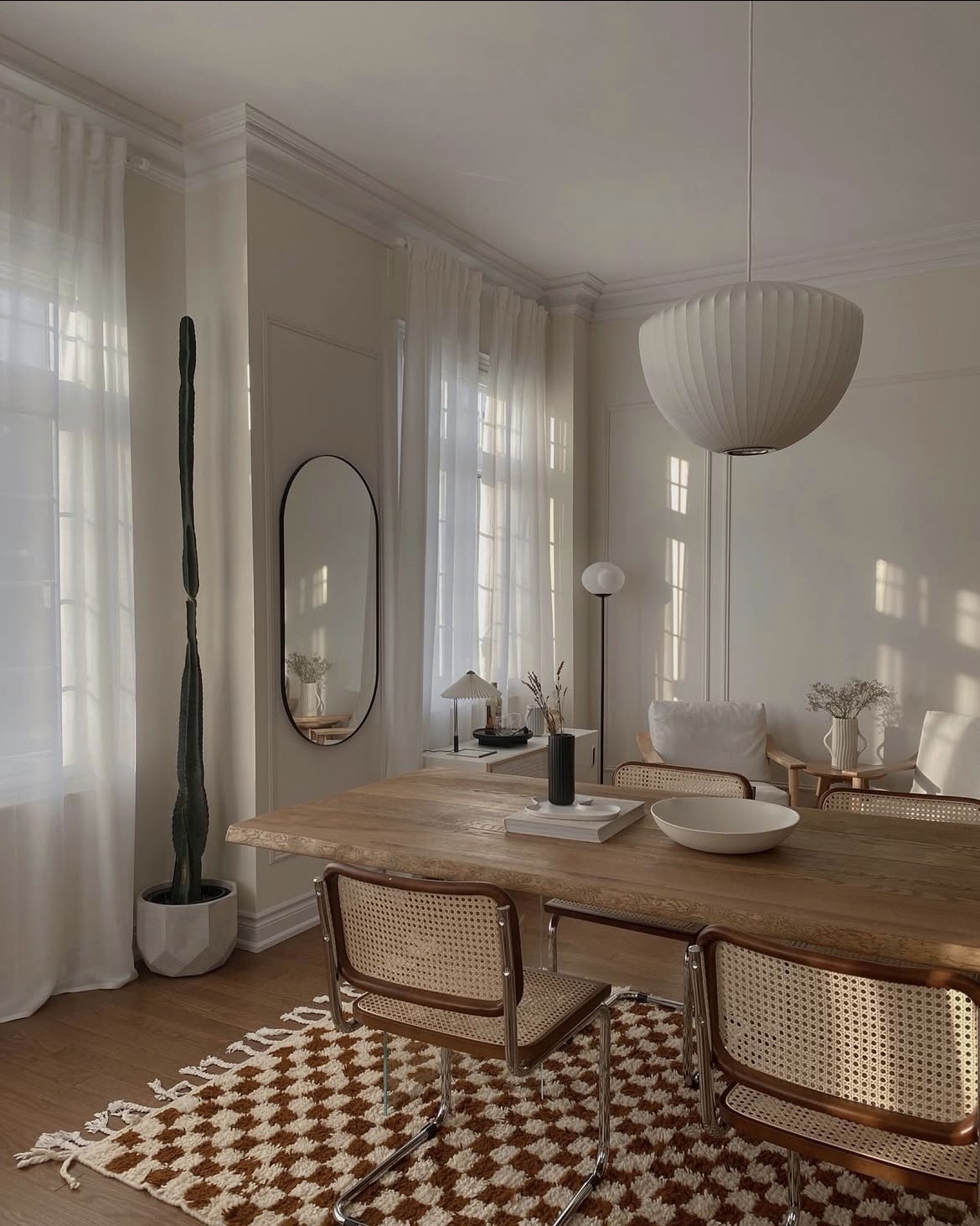
29. Layer Light Sources
Create those soft levels of light for flexibility when using your dining room. Use a few features such as a pendant light, table lamp, candles and even wall lights.
A combination of light sources gives you complete control, and it allows you to drop, or up the ambience when required.