

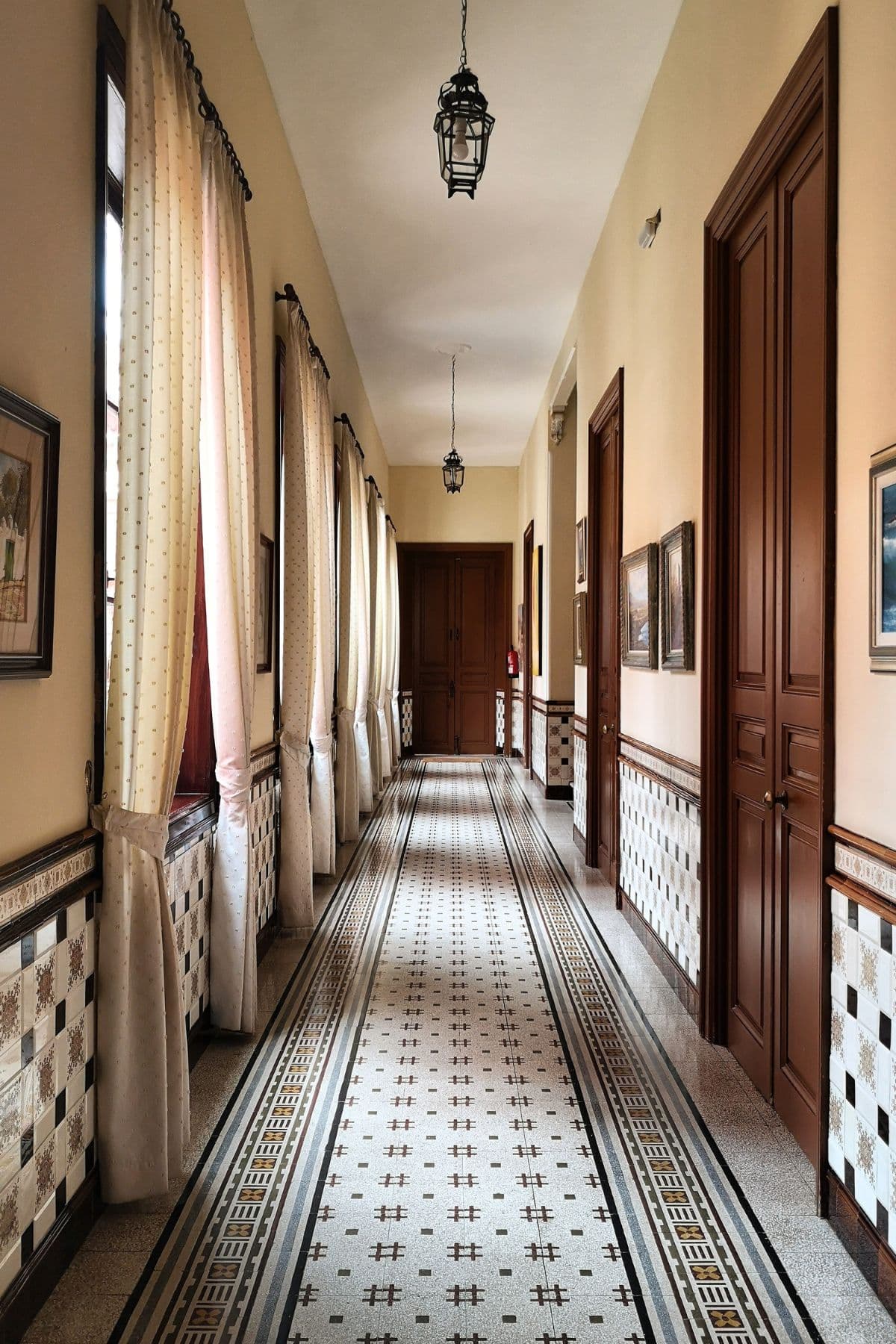
Small hallways are common across the UK, but there are things you can do to create the illusion of a larger space. That includes finding the right way to tile your hallway floor to make it look more spacious than it actually is.
Take a look at our five ways of making a small hallway feel bigger.
1.Seamless spaces
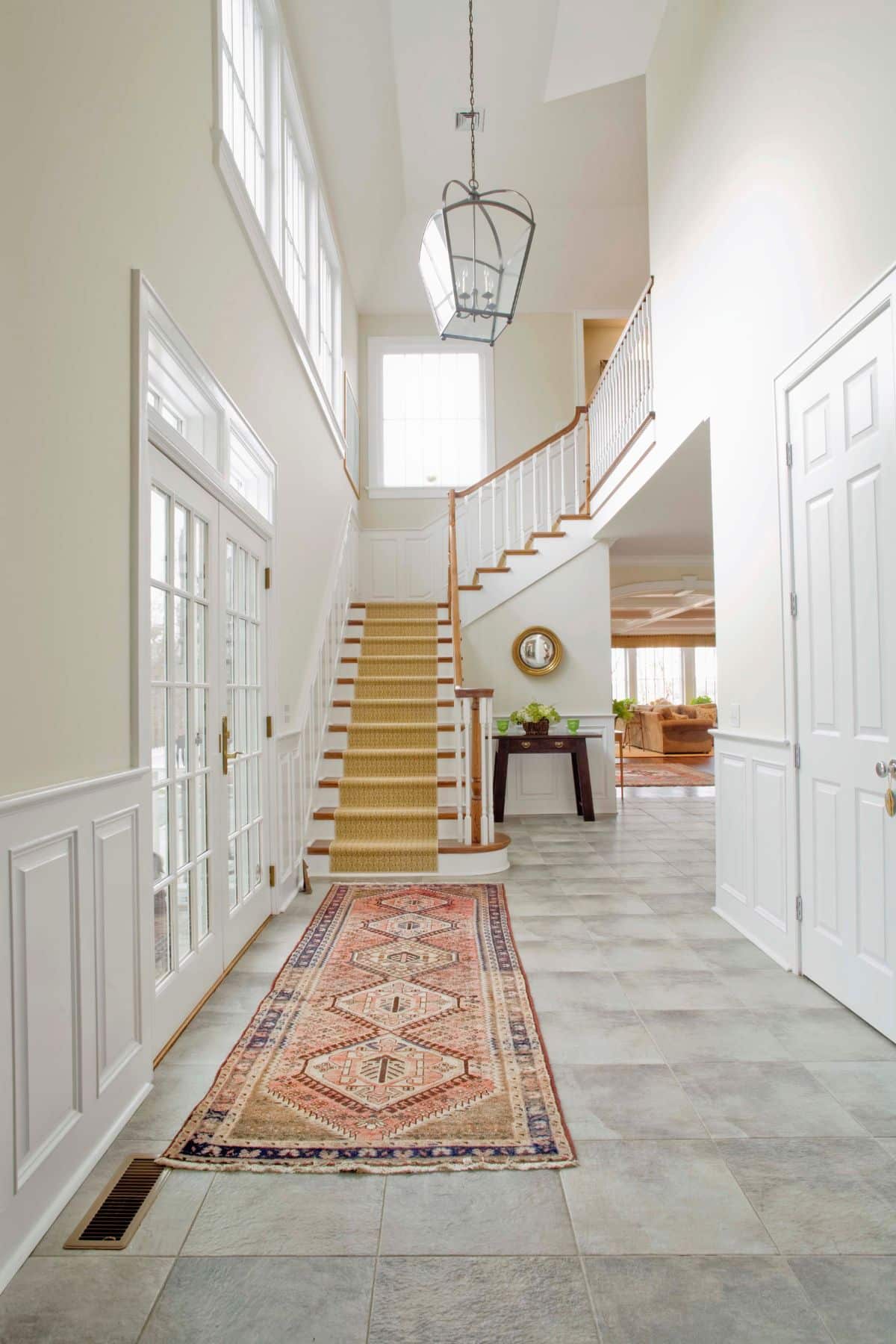
Using large-format floor tiles is a smart way to reduce the number of grout lines and create a more seamless look. This style has fewer visual breaks in the floor surface, tricking your eyes into thinking that the area is larger than it is. By using the same colour grout as the tiles, you can further reduce the visual interruption.
Many people assume that because you have a small space, you should use small floor tiles. But this means you’re incorporating more grout lines, making the space look busier and smaller.
2.Diagonal deception
Instead of laying your floor tiles in straight lines across your hallway, think about setting them at a jaunty 45° angle. The effect is to make the footprint of the floor seem larger and to visually move the walls further apart.
Although the floor tiling cost may increase slightly when laying a floor this way, the payoff is an entryway that looks bigger. Higher costs are due to more cuts, higher material wastage, and increased labour.
3.Light & easy
To make the most of any natural light coming into the hallway, choose pale or neutral-coloured tiles for the floor. Paler palettes reflect both artificial and natural light and bounce it around the area, giving the impression of more space.
Light colours are easier on the eye when it comes to distinguishing visual boundaries and help blend the floor with the wall colour, rather than making it a stark contrast. Dark floors with pale wall colours can visually shrink the floor space.

4.The plank effect
A great way to increase visual impact when you have a narrow hallway is to lay wide porcelain wood-effect tiles, timber, or laminate horizontally. This creates the impression of a larger footprint and widens the entryway.
Similarly, if you have a short hallway, orienting the planks lengthwise creates the illusion of a longer space. Putting an engaging focal point at the end of the hallway also draws the eyes forward. Ideas for this include painting the end wall a darker shade or in a bold colour, or hanging a large artwork or oversized mirror.

5. Cohesive flows
As the hallway leads into other rooms, using the same type of flooring in the entryway and adjoining spaces helps to create a sense of continuity. The uninterrupted flow of the same floor tiles blurs the boundaries of the hallway and removes focus from its size.
Keeping wall colours the same also removes visual breaks and presents a continuous flow from the hallway to the living area, kitchen, utility, or dining room. It’s essentially a way of tricking your brain into thinking it’s one large area rather than separate spaces.
Tiles are the ideal choice for your hallway, regardless of its size, as they cope well with such a high-traffic area, being durable and resistant to wear. They are also relatively easy to keep clean compared to carpet or rugs. With these five tips, you can maximse the impact of your hallway tiles.
