


A bedroom is almost always judged at first sight. From the paint on the wall to the bed linen to the choice of curtains and lights, everything is up there for evaluation. But in this discussion, one thing that is almost always overlooked is the bed and sleep.
Sleep never comes with just your eyes closed; it begins with signals such as the texture of the bedsheet against the skin, the light falling away, softening of the noise, and air that feels clean, not perfumed into submission.
A good bedroom atmosphere quietly tells the nervous system that the day is allowed to end.
Texture Is the First Signal of Comfort
Texture is where the room stops being decorative and starts becoming physical. Your hand moves across cotton, linen, boucle, wool, velvet, wood, and the body notices before the mind writes an opinion. This is also where comfort choices belong, from layered bedding to the mattress itself, which is why Simba Sleep emerges as your perfect partner that helps build a sensory-led bedroom experience that supports rest rather than just displaying taste.
On the other hand, the point is not softness everywhere. That gets dull. A bedroom needs contrast, such as a crisp sheet against a heavier quilt, a matte wall beside a woven blind, a rug that slows bare feet in the morning, and so on.
These details create tiny moments of orientation, almost like punctuation for the body. Too much gloss, too many synthetic finishes, or too many slippery surfaces, and the space starts feeling oddly awake.
| Layer | Design choice | Sleep effect |
| Touch | Linen sheets, wool rugs, upholstered headboards | Physical ease |
| Weight | Quilts, throws, layered bedding | Cocooning cue |
| Surface | Matte finishes, wood, woven textures | Less harshness |
| Temperature | Breathable fabrics, seasonal layers | Settled feel |
Light Decides the Mood Before the Mind Does
Light is more important in a bedroom experience than most people admit. One harsh ceiling fitting can undo an otherwise beautiful bedroom. It flattens the room and makes every surface feel exposed.
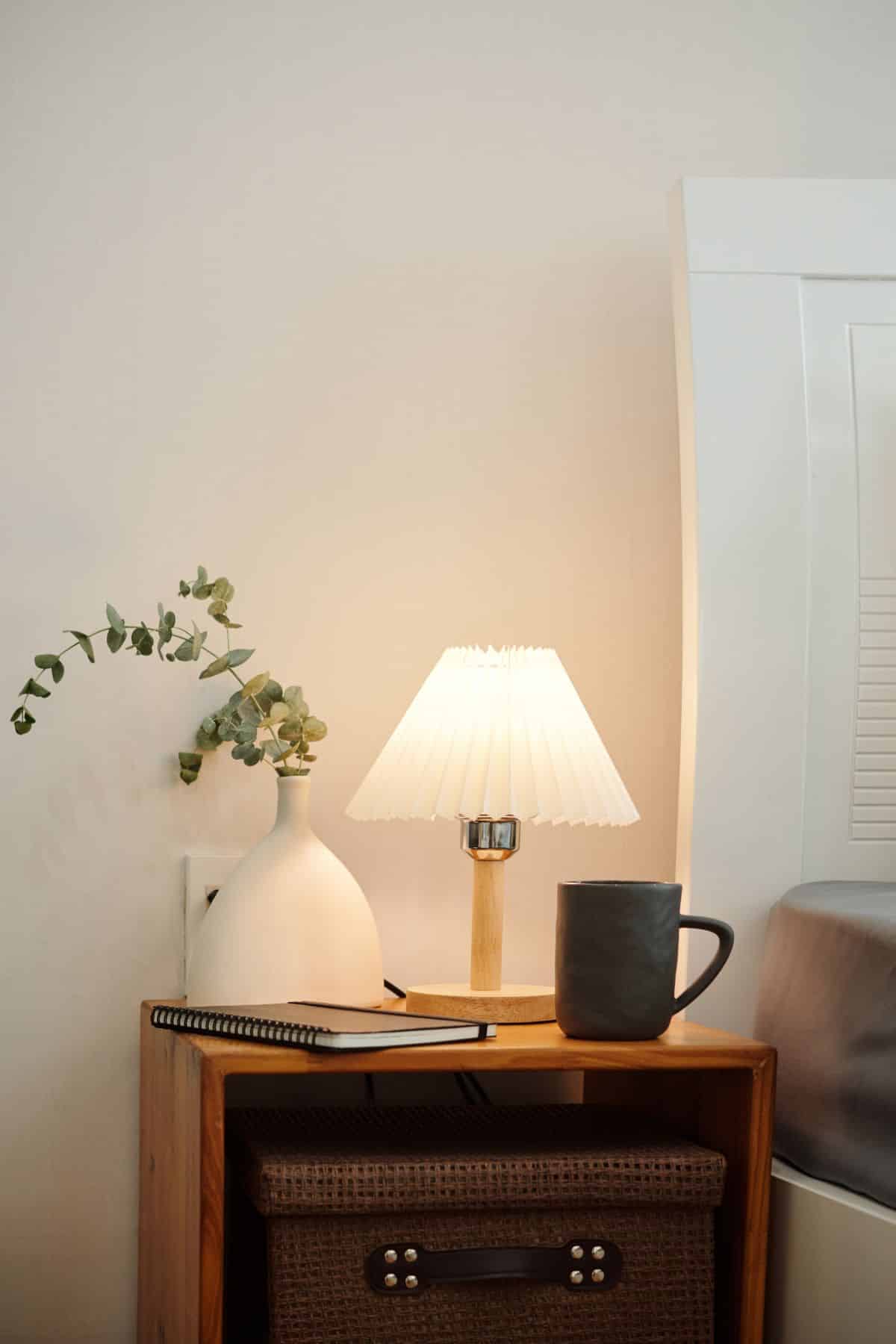
Not restful and more like a changing room at closing time. Here, layered lighting works because it gives the evening a sequence. With the overheads turned off, the Bedside lamps on, and maybe a low wall light, the room descends, creating a calmer and more restful atmosphere.
Sound Changes How Safe a Room Feels
Quiet is not always silence. Sometimes silence feels sharp, especially in smaller flats, busy streets, or houses where every pipe has an opinion. A good bedroom softens sound instead of pretending it can erase it. Curtains, rugs, upholstered beds, fabric lampshades, books, and full wardrobes help break up the echo and make the room feel less hollow.
This is why minimalist bedrooms can look calm but feel exposed. There is nowhere for sound to land. Every footstep, phone buzz, and door click becomes larger than it should be. The fix does not need to be dramatic: one larger rug, heavier curtains, a padded headboard. While these are small moves, they change the room’s acoustic temperature, and suddenly the space falls into a hush.
Scent Should Whisper, Not Perform
Managing the scent is tricky because it is easy to overdo. A bedroom should not smell like a shop display or a hotel corridor trying too hard. Instead, it should carry an organic scent gathered from the clean sheets, fresh air, the timber drawer, etc. The idea here is to ensure that your nose registers calm.
Because the strongly scented candles and layered diffusers can become a form of noise. They compete with the body rather than settle it. There is also the practical matter of sensitivity. Some people sleep poorly around strong fragrances, even if they like them at first. So, the better rule is restraint. Open the windows when possible, wash textiles regularly and choose one quiet scent.

A Simple Sensory Comparison for Bedroom Choices
| Choice | Looks good | Feels good | Best use |
| White cotton sheets | High | High | Fresh bedrooms |
| Velvet headboard | High | Medium | Hard walls |
| Gloss furniture | Medium | Low | Sparingly |
| Heavy curtains | High | High | Light control |
| Strong diffuser | Medium | Low | Occasional use |
A Sensory Bedroom Is Built Through Restraint
The best bedrooms are not overloaded with ideas; they are edited. That sounds simple, but it is usually where design becomes difficult. One fewer pattern, one softer lamp, one better fabric, and one surface cleared before bed all add to the sensory design that enhances the experience.
It is never about making the room expensive but making it legible to the body. A bedroom designed this way does not shout style. It settles into usefulness, and the room looks calm. Texture supports the body, light protects the evening, sound loses its edge, and scent stays in the background.
Hence, nothing feels accidental, but nothing feels staged either, and that is the sweet spot. Not perfection, just a room that understands sleep before sleep has to ask.
