

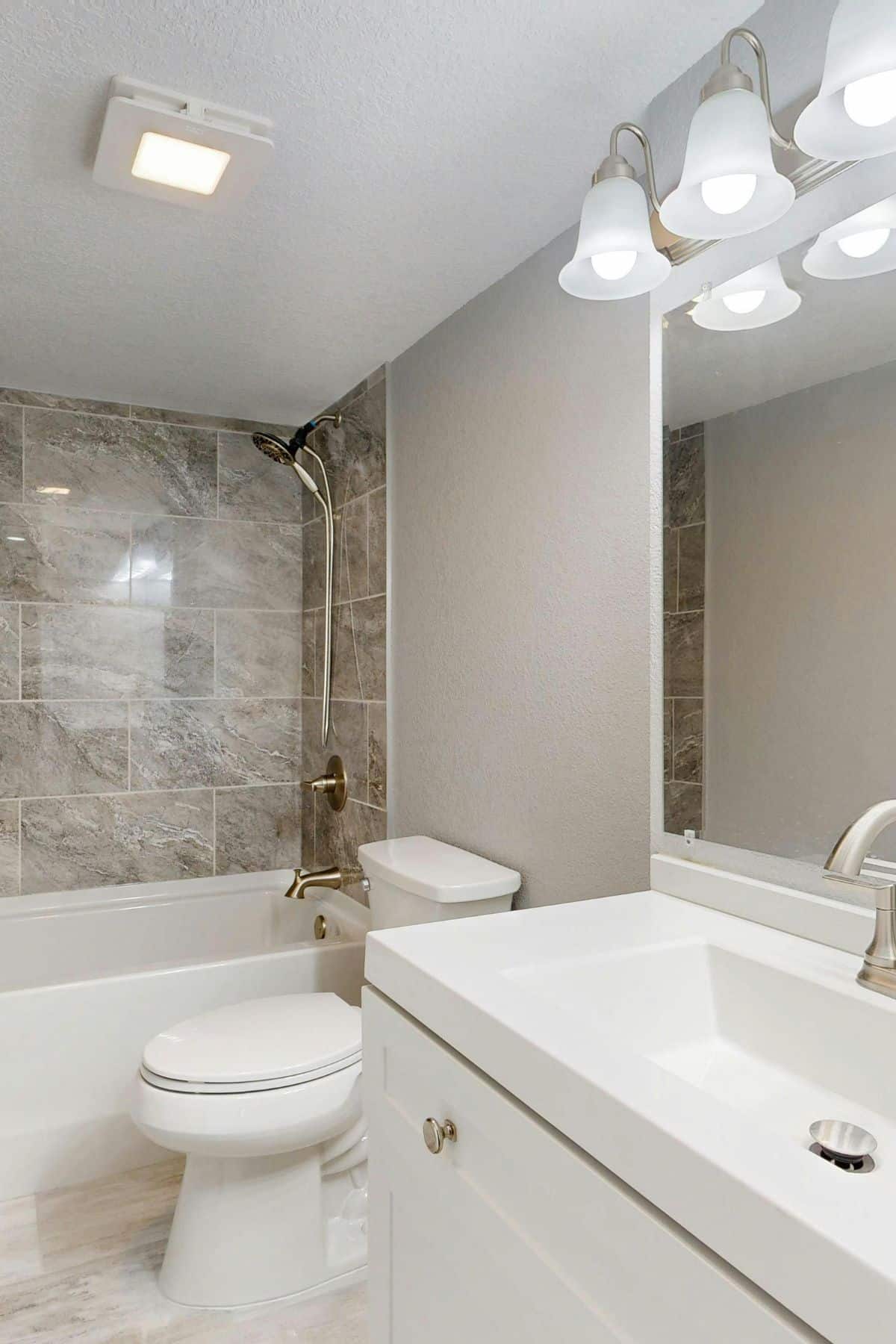
Bathroom spaces play an important role in supporting comfortable ageing at home. As needs change, adapting this room can help maintain daily independence without compromising on style.
Practical planning allows accessibility and visual appeal to work together. With the right features in place, a bathroom can remain safe, functional and refined for years to come.
Bathroom Design Principles for Ageing at Home
Creating a bathroom that supports later life requires planning beyond immediate needs. The aim is to design a space that remains safe, usable and visually cohesive over time. This approach reduces the likelihood of major renovations later and helps sustain independence at home.
Modern accessible design no longer relies on clinical aesthetics. Many functional features now integrate discreetly into contemporary interiors. Grab bars, for example, are available in finishes that coordinate with taps and fittings while also serving as towel rails.
UK building regulations set guidance for accessible bathroom design through Approved Document M. These standards address doorway widths, floor surfaces and sanitary provision.
Following them improves usability and supports long-term compliance with recognised accessibility benchmarks. This aligns with wider national priorities reflected in the UK’s long-term housing renewal strategy, which places emphasis on adaptable and future-ready homes.
A balanced approach considers both present comfort and future requirements. Selecting adaptable features early makes it easier to respond to changing mobility without disrupting the overall design.

Space-Saving Layout Solutions
Even in compact UK bathrooms, thoughtful layout planning can create accessible movement space. Careful positioning of toilets, basins and bathing areas helps maintain clear circulation routes for those using mobility aids.
Wall-mounted basins and toilets increase floor clearance and create a more open feel. They also simplify cleaning, which supports long-term upkeep.
Doorway width plays a key role in accessibility. Wider openings or sliding door systems can improve entry and exit while preserving valuable internal space.
In addition to fixture positioning and circulation space, bathing choice also influences long-term accessibility. Walk-in baths can reduce the need to step over high sides and support safer daily routines, and designs from the Walk In Bath Co are tailored to standard UK bathroom layouts with low-entry access and secure sealing systems.

Smart Storage Solutions
Accessible storage supports independence by reducing the need to bend or stretch. Positioning shelves and cabinets within comfortable reach improves daily usability.
Pull-out and pull-down systems bring items closer to the user. These mechanisms allow everyday essentials to be accessed without strain. Recessed shelving within shower walls or between studs adds storage without reducing movement space.
Keeping toiletries, medicines and cleaning products organised also supports safer routines, particularly in households adapting for later life.
Safety Features with Modern Appeal
Safety elements can now complement contemporary interiors. Non-slip flooring is available in a wide range of finishes, including stone-effect porcelain and patterned vinyl. For barefoot areas such as bathrooms, class C slip resistance provides higher protection against falls, in line with HSE guidance on improving slip resistance for pedestrian surfaces.
Grab bars have evolved in design and can blend with other fittings. Best practice placement includes horizontal support beside the toilet and additional support on the adjacent wall to assist sitting and standing.
Clear lighting improves safety as well as comfort. Adequate ambient and task lighting supports grooming and reduces the risk of missteps, especially in the evening.
Shower and Bath Developments
Level-access showers remain a popular choice for accessible bathing. Removing raised edges reduces trip risk and allows easier entry for those with limited mobility, in line with later life falls prevention guidance.
Walk-in baths provide an alternative for individuals who prefer soaking. Contemporary designs focus on low-entry doors, secure sealing systems and integrated seating to improve stability. Quick-drain features can reduce waiting time after bathing, while integrated temperature controls maintain stable water levels for added reassurance.
Fold-down shower seats offer flexibility without permanently occupying space. When not in use, they can be neatly stored against the wall, maintaining a streamlined appearance. Secure wall fixing and appropriate positioning ensure that seating supports safe transfers in and out of the shower area.

Technology Integration for Independence
Advances in bathroom technology can support comfort and safety. Thermostatic controls maintain consistent water temperatures, reducing the risk of scalding and supporting the safe management of hot and cold water systems in domestic settings.
Motion-activated taps reduce the need for grip strength and minimise contact points. Smart mirrors with adjustable lighting and anti-fog features improve visibility for daily routines, particularly in low light. When selected carefully, these additions support independence without complicating the overall design.
Material Selection for Maintenance and Safety
Selecting appropriate materials supports both hygiene and ease of maintenance. Large-format tiles and solid surface surrounds reduce grout lines and limit areas where dirt and moisture accumulate.
Antimicrobial finishes can slow the growth of bacteria and mould, contributing to a cleaner environment over time. Visual contrast between floors, walls and sanitaryware assists users with reduced vision by clearly defining edges and surfaces.
Surface temperature is another consideration. Underfloor heating can improve comfort without adding visible fixtures, while certain tile finishes provide a gentler feel underfoot compared with traditional ceramic.
Designing for ageing at home means thinking ahead rather than reacting later. By aligning layout, storage, safety features and bathing solutions from the outset, households can reduce future disruption and support everyday independence. A well-planned bathroom balances comfort, compliance and contemporary design, helping people remain confident in their own space as needs evolve.
